China Buy Direct

Understand the rep market in minutes. Learn to start buying directly from Chinese factories and suppliers. Save a fortune on retail prices. Avoid scammers and resellers.
You'll learn to get direct access to the world's biggest global market, saving money. Learn how to use shopping agents, check products, build parcels and ship internationally without relying on expensive resellers or getting scammed on spreadsheets!
Want to keep up to date with news and information? Follow our Reddit communities...


NEED TO SOURCE FROM THE BEST SUPPLIERS? CHECK OUT THE CHINA BUY DIRECT VIP DIRECTORY
Get access to dozens of trusted and proven suppliers with prices and products to suit everyone's taste and budget - watches, sneakers, jewellery, headphones, sunglasses, designer clothes and urban streetwear - you name it, it's there. Just click on the banner below or follow this link

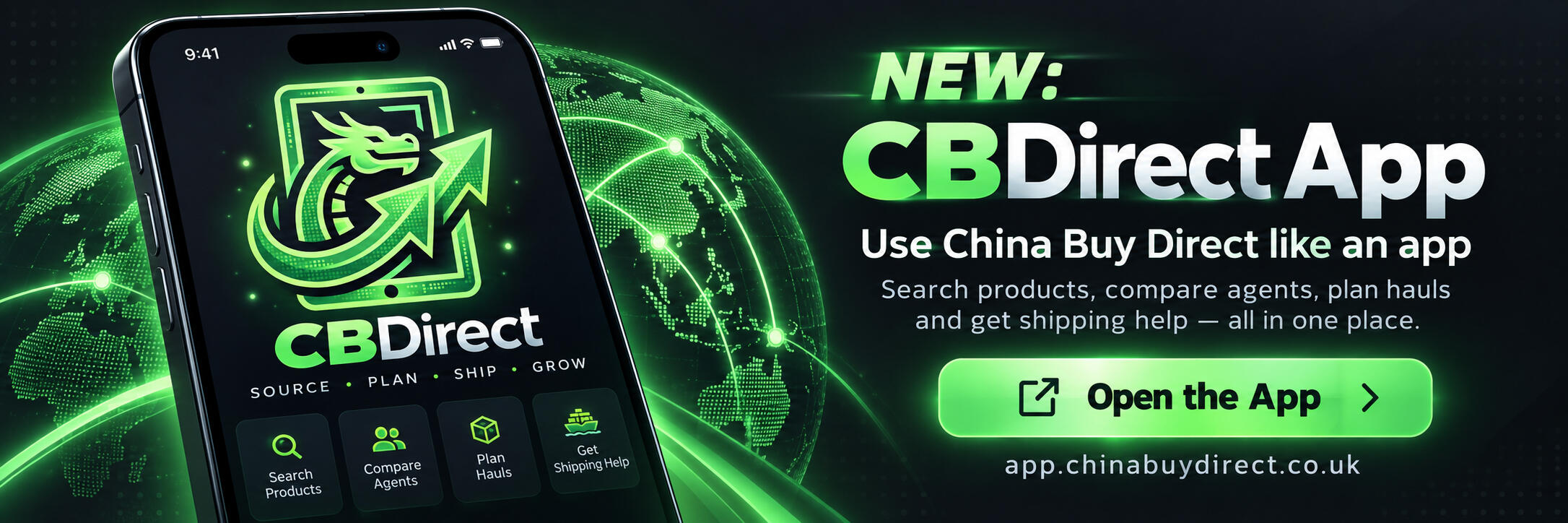
NEWLY LAUNCHED - THE CHINA BUY DIRECT APP!

Beginner-friendly
Follow the process from finding an item through to international delivery.
Transparent recommendations
Affiliate relationships are disclosed and alternatives are included.
Plain English guidance
Complicated agent, shipping and platform terminology explained simply.
No pushy agent rankings
Compare agents and choose the service that fits your own requirements.
About, Contact & Legal Information

Finding your way around
Learn the Process
Familiarise yourself with the whole process from start to finish in seconds.
Platform Guides
You'll need to know about platforms, how to access, source and buy from them.
Buying
Learn how to search and source products and get your agent to buy, quality check and store them for you.
Shipping
Understand how to get the most cost effective shipping routes and how to ship efficiently and quickly.
Help Guides
Tips & tricks for newcomers, and the latest articles to help you keep up to date with agents and shipping news.
News & Blog
Stay up to date with the latest shipping and agent news. Our blog will provide updates and extra resources.

What's behind the guide?
This guide is an easy, step by step walkthrough of the entire process. When you first look at Chinese platforms, agents, QC photos, warehouses and shipping lines, it can feel confusing. This guide breaks the process down into plain English so you can learn what to check before spending money. It's based on practical research, user feedback and ongoing updates from the buying-agent community.
Lets start with the basics

Why did I create China Buy Direct?
I built this guide after I made lots of mistakes myself; I fell for the resellers several times before I realised that I was paying a lot of mark up on items that I could source myself. I decided I wanted to build a community where we could share links and help each other source items, without being flooded with bad links and 'bait and switch' scams. I built China Buy Direct to make the buying process easier to understand for beginners.
Clear guidance, not blind recommendations
China Buy Direct explains the buying process before recommending tools, agents or platforms.
The goal is to help beginners understand each step clearly, from finding products to checking QC photos and choosing a shipping line.
The guide is written to help you make the right decisions first time around.
How this site is funded
Affiliate Disclosure
China Buy Direct is written as a beginner guide first, not as a list of paid recommendations. However, the agent links may earn China Buy Direct a small sign up fee. This does not change the price you pay, but helps maintain the website and the community - I am reinvesting the money into continuous reporting of up to date news and information across our social media presence.
How Buying Direct Works
It really is simple. You just need to learn what all the moving parts are.

Choosing an agent

So what is a warehouse agent?
A warehouse agent is a company in China that helps you buy from platforms that may not ship directly to your country.
You send the product link to the agent, they buy the item, receive it at their warehouse, take QC photos, store it, and help you build and ship your parcel internationally.
Most agents charge small service fees, usually built into the purchase or shipping process.
What should I look for in an agent?
When choosing a warehouse agent, look beyond the sign-up offer. Check that they support your country, offer clear shipping lines, provide QC photos, explain costs properly and make parcel building easy.
Also compare payment options, storage rules, support, exchange rates, handling fees and recent user feedback.
For beginners, reliability, clear costs and good QC photos usually matter more than saving a small amount on fees.
Who do you recommend?
Our current recommended agent is MyCNBox. In our experience, they perform well for order speed, warehouse handling, packing, shipping choice, price range and ease of use, making them a strong starting point for beginners. That said, no agent suits everyone. We group agents into clear tiers so you can compare your options properly.
Before choosing, check current fees, shipping lines, recent user feedback, QC photo quality, support response times and parcel tools. You can also compare real user experiences in communities such as r/chinawarehouseagents.
Comparing Agents
Who do you recommend?
Use the table below and read through the descriptions of each agent to help you decide. None of the agents require any payment to join, so you can actually sign up to more than one of them.


Why Did We Select Our Recommended Agent?
MyCNBox is our current primary recommended agent.Why?- Excellent user interface
- Very fast processing speeds - that's the time from paying for your order to getting it in your warehouse space
- You get QC videos as well as photos
- Great customer service systems
- Very good shipping rates
- No brand restrictions
- Good selection of shipping options
- Constantly improving and evolving
- I have hauled over 150 parcels and not had one seizure or problem.
Our Current Recommended Agent
Popular Alternatives
Established Agents
Emerging Agents
Research Before Using - Note: Mulebuy has been removed from this guide due to shutdown.
Some agent links may be affiliate links. This does not change the price you pay. Always check current fees, shipping options and restrictions before placing an order.

MyCNBox
Recommended Agent
MyCNBox is our current primary recommended agent and a strong starting point for beginners.
Based on our experience, MyCNBox performs well for purchasing speed, order processing, warehouse handling, packing speed and general ease of use. The user interface is clear, the buying process is straightforward, and there is a good range of shipping lines at different price points.
Best for:
Beginners who want a clear, practical agent with a simple ordering flow. First agent to offer free QC videos as well as photos.
Why we list it:
Good buying speed, strong processing times, clear parcel handling and a useful range of shipping options.
Check before using:
Shipping prices to your home country, current fees, available lines and recent user feedback.

Superbuy
Popular Alternative
Superbuy is one of the better-known shopping agents and is often mentioned by users comparing different buying routes from China.It may suit buyers who want to use a more familiar agent with an established platform, broad service coverage and a lot of existing discussion online.
Best for:
Users who want a well-known agent with a longer public track record.
Why compare it:
Established name, broad platform support and plenty of user discussion to research.
Check before using:
Current service fees, shipping costs, restricted item rules and available shipping lines to your home country.

Sugargoo
Popular Alternative
Sugargoo is another commonly discussed agent and is often considered by buyers comparing price, usability and shipping options.It may suit users who want an alternative to the larger agents and are comfortable checking fees, shipping estimates and recent feedback before ordering.
Best for:
Buyers who want to compare pricing and shipping options across different agents.
Why compare it:
Shipping estimates, QC photo rules, support response times and any recent platform changes.
Check before using:
Current service fees, shipping costs, restricted item rules and available shipping lines to your home country.

CSSBuy
Popular Alternative
CSSBuy is a long-running agent that some users still compare when looking at different warehouse, shipping and parcel-building options.It may suit users who are willing to spend a little more time understanding the platform and checking the details before placing an order.
Best for:
Users who want another established option to compare against newer platforms.
Why compare it:
Longer market presence, agent experience and a range of shipping routes.
Check before using:
User interface, fee structure, warehouse rules, support experience and current shipping prices.
BaseTao
Established Agent
Basetao is an older agent option that some experienced buyers still compare when looking at different purchasing and shipping routes.It may not be the simplest starting point for every beginner, but it is worth knowing about if you want to compare a wider range of agents.
Best for:
Users doing deeper agent research before choosing a platform.
Why compare it:
Longer presence in the agent space and useful as part of a wider comparison.
Check before using:
Ease of use, payment options, service fees, support speed and current shipping routes.
Kakobuy
Established Agent
Kakobuy is another agent that can be included for comparison, especially for users who want to look beyond the most obvious options.It should be treated as one agent among several, rather than a default choice. Compare the full process before using it.
Best for:
Users who want to compare alternative agents and shipping routes.
Why compare it:
Adds more choice for buyers who do not want to rely on a single platform.
Check before using:
Current fees, user interface, QC photo process, available lines and support quality.
Pikobuy
Emerging Agent
Pikobuy is a much newer shopping agent option. It may be worth comparing if you are looking at alternative agents, but there is less long-term public feedback available than with more established platforms.Because Pikobuy is newer, we treat it as an emerging option rather than a proven default recommendation.
Best for:
Users who want to compare newer agent options, and want to take advantage of more launch offers.
Why compare it:
Newer platform, looking to offer competitive terms and another choice for buyers who like comparing services. Also have some competitive introductory offers to try and entice new users to start using their services.
Check before using:
Current fees, shipping lines, QC photo process, warehouse handling, support response times and recent user feedback.
Transparency note:
Pikobuy has offered affiliate terms to China Buy Direct. Because it is a newer agent, it is listed as an emerging option rather than a proven recommendation.
GTBuy
Emerging Agent
GTBuy is a newer or less established option that may be worth watching as the agent market changes.It should be compared carefully against better-known agents, especially if you are placing your first order.
Best for:
Users who want to track newer agents and compare current offers.
Why compare it:
Useful as part of a wider agent comparison, especially if its fees or shipping options look competitive, and they are using offers to entice new users.
Check before using:
Recent user feedback, support quality, shipping prices, QC photos and warehouse handling.

OOPBuy
Emerging Agent
OOPBuy is another newer agent option to compare if you are looking beyond the most established names.As with all emerging agents, it is sensible to check recent feedback before sending a large or expensive order.
Best for:
Users who are comparing newer agent platforms.
Why compare it:
Gives buyers another option to review for fees, interface and shipping routes.
Check before using:
Shipping availability to your home country, recent processing times, QC process and support response.
EastMallbuy
Emerging Agent
Eastmallbuy is an alternative agent option that may be worth researching if you want a wider view of the market.Because it is not as widely established as some larger names, users should compare it carefully before ordering.
Best for:
Users who want to explore less common agent options.
Why compare it:
Adds variety to the agent comparison and may offer different shipping or service options.
Check before using:
Current fees, shipping line choice, warehouse rules, QC photos and recent user experiences.

Loongbuy
Emerging Agent
Loongbuy is another agent to watch for users comparing newer or alternative buying routes from China. It has a big Telegram and Discord presence with lots of item links easily accessible.It should be researched carefully, especially if you are new to shopping agents or shipping internationally.
Best for:
Using with direct item links from other social media sources.
Why compare it:
Another option in the agent market with its own pricing, interface and shipping routes.
Check before using:
Recent feedback, shipping prices, customer support, QC photo quality and parcel-building process.

ACBuy / AllChinaBuy
Research Before Using
ACBuy, also known as AllChinaBuy, is included so readers can compare it against other agent options.Before using it, check current user feedback, fees, platform reliability and shipping options carefully. This is a long established platform but there have been some real issues recently with rising costs, regulatory problems and availability of its platform.
Best for:
Users who want an established seller, but have done their due diligence.
Why compare it:
Some buyers may see it mentioned online and want to understand where it fits.
Check before using:
Current reputation, fees, support quality, QC process, parcel handling and available shipping lines.

Understanding the Platforms
Where do you actually buy from?
AliExpress, Temu and DHgate are only part of the picture. Many products sold there come from the wider Chinese supply chain, including platforms like Taobao, Weidian and 1688.
These platforms are used by sellers, suppliers and small businesses to source products before they are resold elsewhere. They can offer more choice, lower prices and access to items that may not appear on international shopping sites.
Each platform works differently. Taobao is a general marketplace, Weidian is often used for direct seller links and niche finds, while 1688 is more focused on suppliers, factories and wholesale-style listings.
Buying directly can be difficult because of account setup, translation, payment limits, domestic shipping and returns. This is why many Western buyers use a warehouse agent.
The agent buys the item in China, receives it at their warehouse, takes QC photos, stores your orders, combines them into one parcel and arranges international shipping.
Using an agent does not remove every risk, but it gives you a clearer process and a chance to check your items before they leave China.
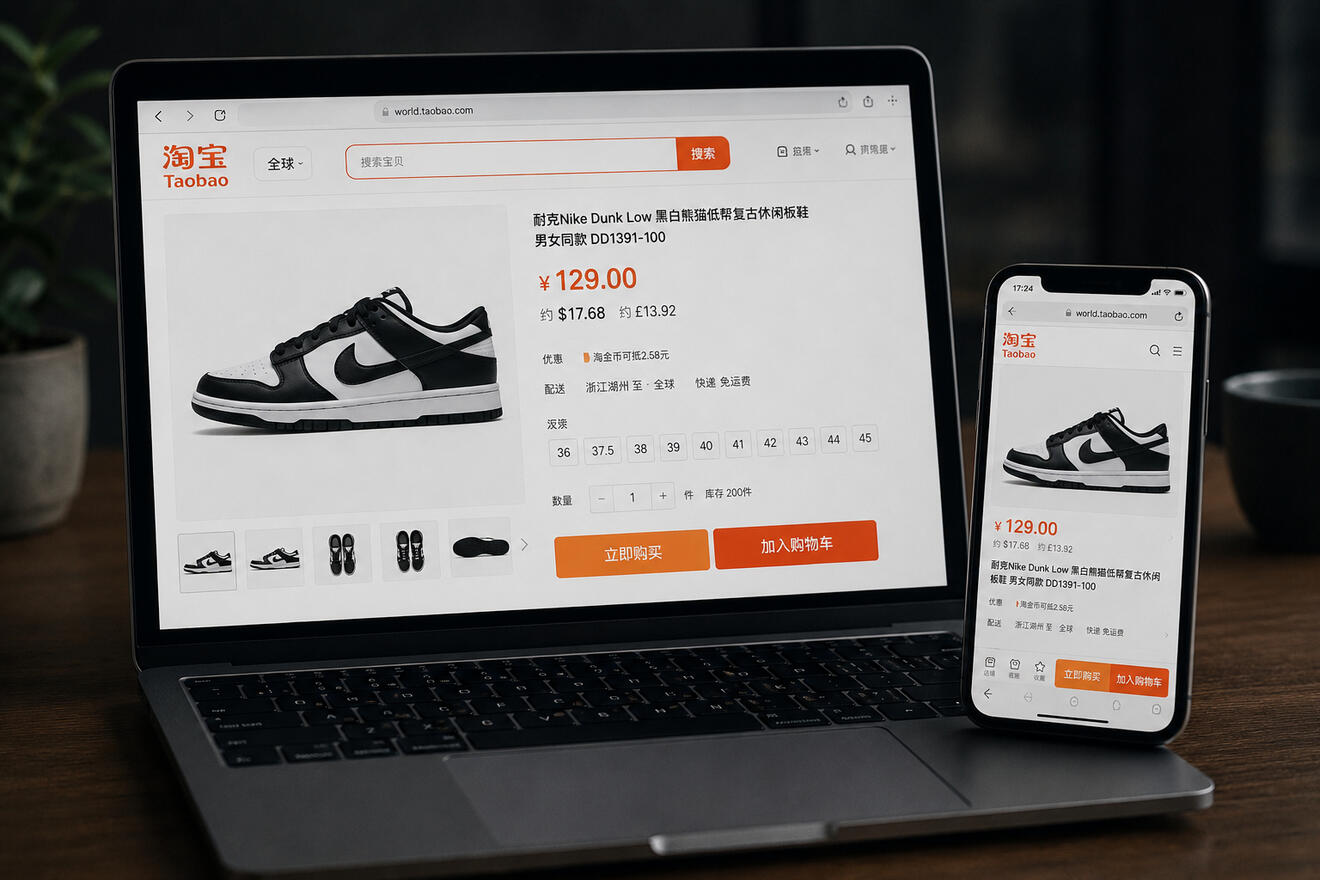

Setting up platform access
Before using Taobao, Weidian or 1688, it is usually easiest to start on a desktop or mobile browser rather than jumping straight into the app. Open the platform in your browser, turn on automatic translation, and work through the sign-up steps slowly. Some pages may still show Chinese text, so use your browser’s translate option, screenshot translation, or Google Translate where needed. Once your account is set up, you can search, browse products, copy links and send them to your shopping agent.
Taobao is usually the easiest place to start. It has a huge range of products, lots of sellers, competitive prices and a more familiar shopping-platform feel.
Weidian is often used by smaller sellers and communities that share direct product links. It can be useful for finding specific items, but it is usually easier when you already have a link.

1688 is aimed more at factories, suppliers and bulk buyers. Prices can be very low, but listings may be less beginner-friendly and some sellers have minimum order quantities.
Best general platform
Taobao is usually the best place to start if you are new to buying from Chinese platforms. It works more like a normal online marketplace, with a huge range of products, seller stores, product photos, reviews, size options and search results.Taobao is useful because it gives you lots of choice. You can search for products, compare similar listings, check seller activity, look at photos and then copy the product link into your agent’s website.

Best for shared links and niche sellers
With Weidian, many users find products through shared links in communities, spreadsheets and Reddit posts rather than normal searches.
It can be useful when you already have a product link, but harder to browse as a beginner. A shopping agent makes this easier because you can paste the Weidian link into their site and let them handle the purchase.

Best for competitive pricing
1688 is a Chinese supplier platform aimed more at factories, wholesalers and bulk buyers. Prices can look very low, but listings are often less beginner-friendly and may be designed for domestic Chinese buyers.
It can be useful for comparing suppliers, buying multiple items or finding lower per-item prices. Some sellers may have minimum order quantities, unclear options or less polished product pages.


Buying Products
This section shows how to find products, compare listings, send links to your agent, check warehouse arrivals and prepare your parcel for shipping.
Step 1: Find The Product
Search Taobao, Weidian or 1688 using keywords, image search or links shared by sellers and communities.

Ways to Search
Finding good products takes a bit of practice. Do not rely on one search method only. Try a few different routes and compare several listings before sending anything to your agent.1. Search in English first
Start with simple English terms to get a feel for the platform. This can work well on some listings, especially when using browser translation.2. Translate keywords into Chinese
Use Google Translate or another translation tool to turn your search term into Chinese. Chinese keywords often bring up more results and better listings.3. Use reverse image search
If you already have a product photo, upload it or use image search to find similar listings. This is often one of the quickest ways to track down products.4. Browse seller stores
If you find one good item, check the seller’s store. They may have similar products, different colours, better prices or matching items.5. Compare similar listings
Do not buy from the first listing you find. Compare photos, prices, reviews, seller activity and options before choosing.Beginner tip:
Save links as you search. It is easier to compare five possible listings calmly than to rush into the first cheap one you see.

Step 2: Send The Link To Your Agent
Your agent buys the item for you, receives it at their warehouse and updates you when it arrives.

Agent Basics
Once you send a product link to your shopping agent, the agent becomes the middle step between you and the Chinese seller. You are not usually dealing with the seller directly.1. The agent checks your order
The agent reviews the product link, options, size, colour, quantity and any notes you added before placing the order.2. The agent buys from the seller
If everything looks correct, the agent purchases the item in China on your behalf.3. The seller ships to the warehouse
The seller does not usually ship the item to your home country. They send it to the agent’s warehouse in China.4. The agent updates your order status
Your agent will normally show updates such as purchased, seller shipped, arrived at warehouse, stored, or ready for QC.5. The item is stored in your warehouse account
Once the item arrives, it is added to your agent warehouse. From there, you can check photos, wait for other items, return or exchange if needed, or prepare it for shipping.Beginner tip:
Do not panic if there are several status updates you do not recognise. Most agents use their own wording, but the basic flow is usually the same: order placed, seller ships, warehouse receives, QC photos added, item ready to ship.

Step 3: Check Your QC Photos
Once the item arrives, your agent provides QC photos so you can check the details before shipping.

QC Photos
QC photos are the quality control photos your agent takes when an item arrives at their warehouse. They help you check the product before you pay for international shipping.1. Check the obvious details first
Look at the colour, size, quantity, style and general shape of the item. Make sure it matches what you ordered.2. Look for visible problems
Check for stains, marks, damage, poor stitching, missing parts, wrong labels or anything that looks different from the listing.3. Compare with the seller photos
Open the original product listing and compare it with the QC photos. Do not expect perfect studio lighting, but the item should still look like the product you ordered.4. Ask for extra photos if needed
If you are unsure, many agents allow you to request extra photos. This can be useful for measurements, labels, soles, tags, logos, packaging or close-up details.5. Decide before shipping internationally
Once the item leaves the warehouse, returns become much harder. If something looks wrong, deal with it before building your parcel.Beginner tip:
Do not rush through QC photos. A few minutes checking properly can save you from shipping the wrong item across the world.

Step 4: Build Your Parcel
You can combine several items into one parcel, choose packaging options and prepare everything for international shipping.

Parcel Guide
Once your items are stored in the agent’s warehouse, you can choose which items to ship together. This is called building a parcel. Instead of shipping every item separately, you can combine several items into one international shipment.1. Choose which items to include
Select the items you want to ship from your warehouse account. You do not have to ship everything at once.2. Check the estimated weight
Your agent will usually show an estimated weight before packing. This helps you compare shipping lines and get a rough idea of cost.3. Decide whether to combine or split
Combining items can be cheaper, but very large or heavy parcels may cost more, attract more attention, or have fewer shipping options. Sometimes it is better to split a haul into smaller parcels.4. Choose any packing options
Some agents let you remove packaging, add corner protection, use waterproof wrapping, add vacuum packing, or request extra parcel protection.5. Review the final shipping cost
The first estimate may not be the final price. Once the parcel is packed, the agent may update the final weight, volume and shipping cost.Beginner tip:
For your first order, keep the parcel simple and not too large. A smaller test parcel is easier to understand and less stressful if anything goes wrong.

Step 5: Choose A Shipping Line
Compare cost, speed, parcel limits and tracking before choosing the shipping option that suits your order.

Shipping Basics
Once your parcel is packed, you need to choose how it will be shipped to your home country. This is where you compare shipping lines, prices, speed, tracking and any restrictions before paying for international delivery.1. Compare the available shipping lines
Your agent will usually show several shipping options. These may vary by country, parcel weight, parcel size and item type.2. Check the speed and cost
Faster lines usually cost more. Cheaper lines may take longer or offer less detailed tracking. Do not choose only by price.3. Look at tracking quality
Some shipping lines provide better tracking updates than others. This can make a big difference if you are nervous about your first parcel.4. Check item restrictions
Some lines may not allow certain items, materials, batteries, liquids, branded goods or oversized parcels. Always check the line rules before selecting one.5. Understand weight and volume
Shipping cost is not always based only on actual weight. Large but lightweight parcels may be charged using volumetric weight, which can make shipping more expensive than expected.Beginner tip:
For your first order, choose a reliable line with clear tracking rather than automatically choosing the cheapest option. A slightly more expensive line can be worth it if it gives you more confidence and fewer problems.

Shipping
Shipping is the final stage of the buying process, and it is where many beginners feel the least confident. Once your items are stored in your agent’s warehouse, you need to build your parcel, choose a shipping line, understand the estimated cost, and make sure you are comfortable before paying for international delivery.Different shipping lines can vary by price, speed, tracking quality, parcel size limits, item restrictions and destination country. The cheapest option is not always the best option, especially for a first order. You also need to understand customs basics, parcel weight, volumetric weight, declarations and possible delays once the parcel leaves China.This section explains the main things to check before shipping, so you can make a calmer decision and avoid common mistakes.


Shipping Lines
Once your parcel is packed, your agent will usually show several shipping lines. These are the different routes or services that can move your parcel from the agent’s warehouse in China to your home country.Do not choose a shipping line only because it is the cheapest. The right option depends on your parcel size, item type, budget, tracking needs, delivery speed and how much risk you are comfortable with.
Before choosing, check the estimated delivery time, total price, tracking quality, parcel weight limits, item restrictions, customs handling, recent user feedback and whether the line ships reliably to your home country.Beginner tip:
For your first parcel, a balanced line with clear tracking is usually better than the absolute cheapest option.

Weight & Volume
Shipping cost is not always based on weight alone. Agents and couriers may also charge based on how much space your parcel takes up, which is why large lightweight parcels can sometimes cost more than expected.Actual weight is the parcel’s real weight on a scale. Volumetric weight is based on box size. Shipping companies often charge using whichever is higher. Your agent may give an estimate first, then update the final cost after packing and measuring. Before paying, check the final weight, box size, shipping line rules and whether removing unnecessary packaging could reduce the cost.Beginner tip:
Do not panic if the final shipping price changes after packing. This is common. Always check the final weight and volume before choosing a line and paying.

Customs Basics
Customs is the stage where your parcel is checked as it moves between countries. For most buyers, it is simply part of the delivery process.Before shipping, your agent may ask you to complete a declaration with item details, parcel value and shipping information. Always follow your country’s rules and avoid guessing if you are unsure. Customs can affect delivery times. Some parcels pass through quickly, while others may take longer because of checks, missing information or local courier processing. Before shipping, check import rules, restricted items, declaration requirements, parcel value, shipping line guidance and whether taxes, duties or handling fees may apply.Beginner tip:
Do not treat customs as an afterthought. Check the rules, declare responsibly and remember that delays can still happen even when everything is correct.

Tracking & Delays
Once your parcel leaves the agent’s warehouse, tracking can be slow or unclear. This is normal and does not always mean there is a problem. Parcels may pass through export processing, courier handover, customs, local sorting and final delivery. Some shipping lines update often, while others show little movement until the parcel reaches your country.Delays are more likely during busy periods, bad weather, customs backlogs and major Chinese holidays, especially Chinese New Year. Check your agent’s tracker, the shipping line tracker and your local courier tracker if available. If there is no movement for longer than expected, ask your agent for an update.Beginner tip:
Do not judge a shipping line by one slow update. Check the full delivery estimate and recent user feedback before assuming there is a problem.


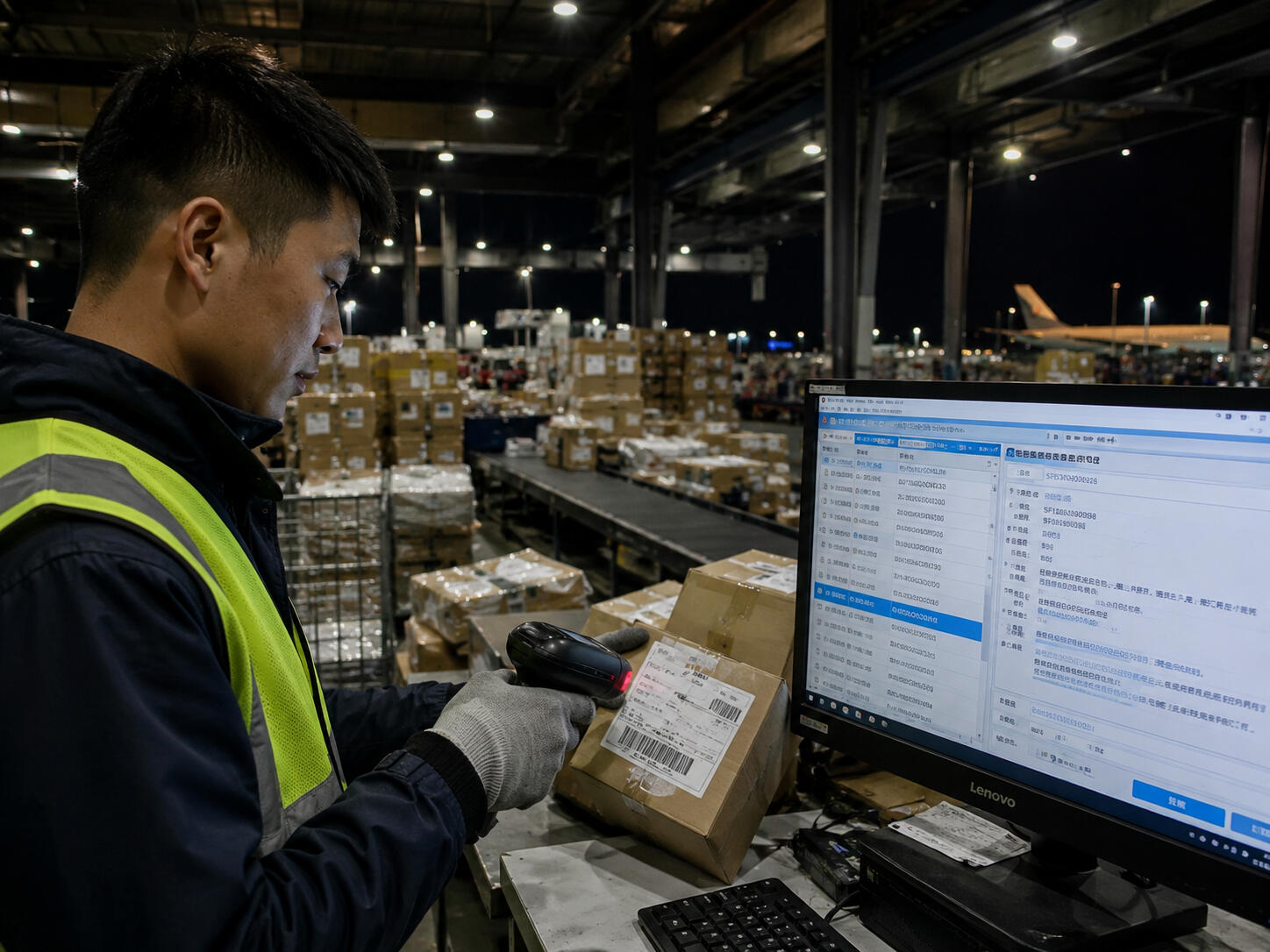
13th July 2026
article · 8-9 MIN READ
Why Your Tracking Looks Stuck: What Actually Happens After Your Parcel Leaves the Warehouse
Tracking often looks broken after a warehouse agent ships your parcel. This guide explains what actually happens between the warehouse and your door, why updates go quiet, what strange phrases like “dismantling the board” usually mean, and how to use apps like 17Track and ParcelsApp properly.

11th July 2026
article · 7-8 MIN READ
The China Buying Calendar: When to Build a Haul, When to Wait, and When Shipping Slows Down
Public holidays, shopping festivals and Chinese New Year can all affect how quickly a haul moves from seller to warehouse to international shipping. This guide explains when to buy, when to wait, and why China’s calendar matters more than most buyers realise.

5th July 2026
article · 6-8 MIN READ
Everyone Is Still Asking for the Best Warehouse Agent. That May Be the Wrong Question.
Everyone keeps asking which warehouse agent is best in 2026. But after reading recent community discussions, the better question may be different: best for what, which country, and what kind of parcel?
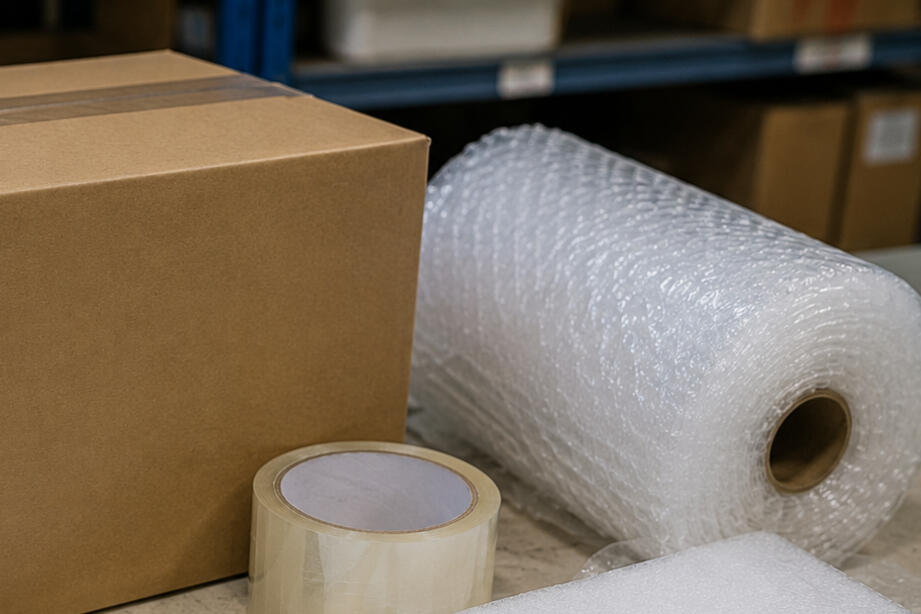
5th July 2026
advice · 4 MIN READ
What are those parcel extras all about?
What are those extra add-on items when you go to pay for your shipping, and re they worth it? We take a look and break each of them down.
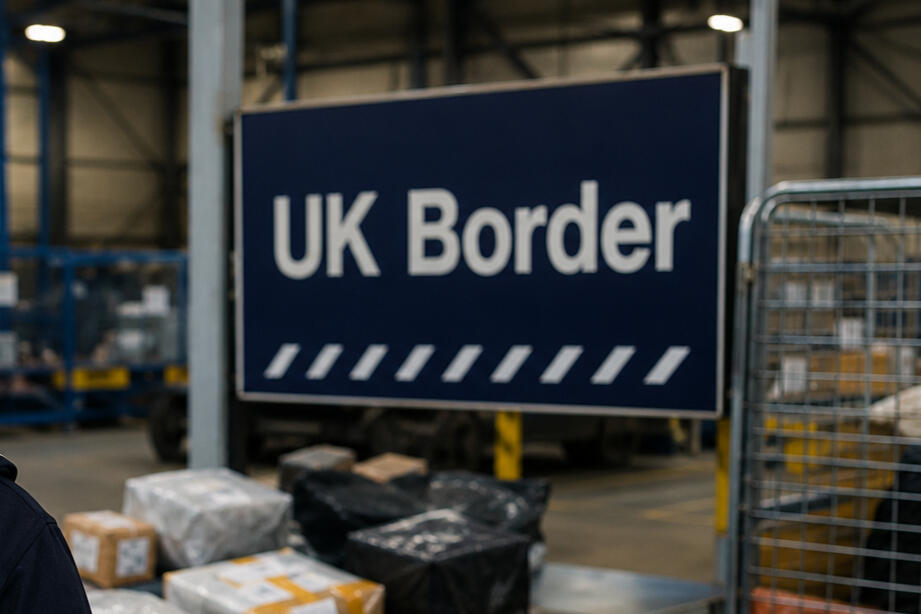
4th July 2026
News · 8 MIN READ
UK Import Rules Are Changing: What It Means for Buying Direct from China
The government has confirmed that it is bringing forward reforms to low-value imports. The current plan is now aiming for October 2028, and the key point is that goods valued at £135 or less may no longer benefit from the customs duty relief they often do now. We look at the implications.
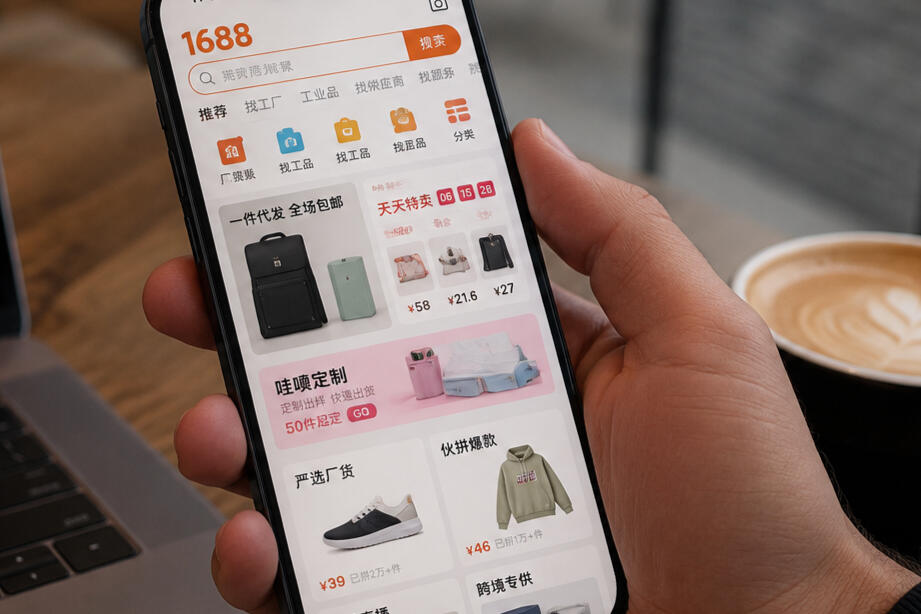
3rd July 2026
platform GUIDE · 6 MIN READ
Is 1688 Cheaper Than Taobao?
It's often stated that 1688 is the true home of the cheapest goods to ship home. But is that really the case? This article breaks down the differences between the platforms and examines the facts...
29th June 2026
BUYING GUIDE · 4 MIN READ
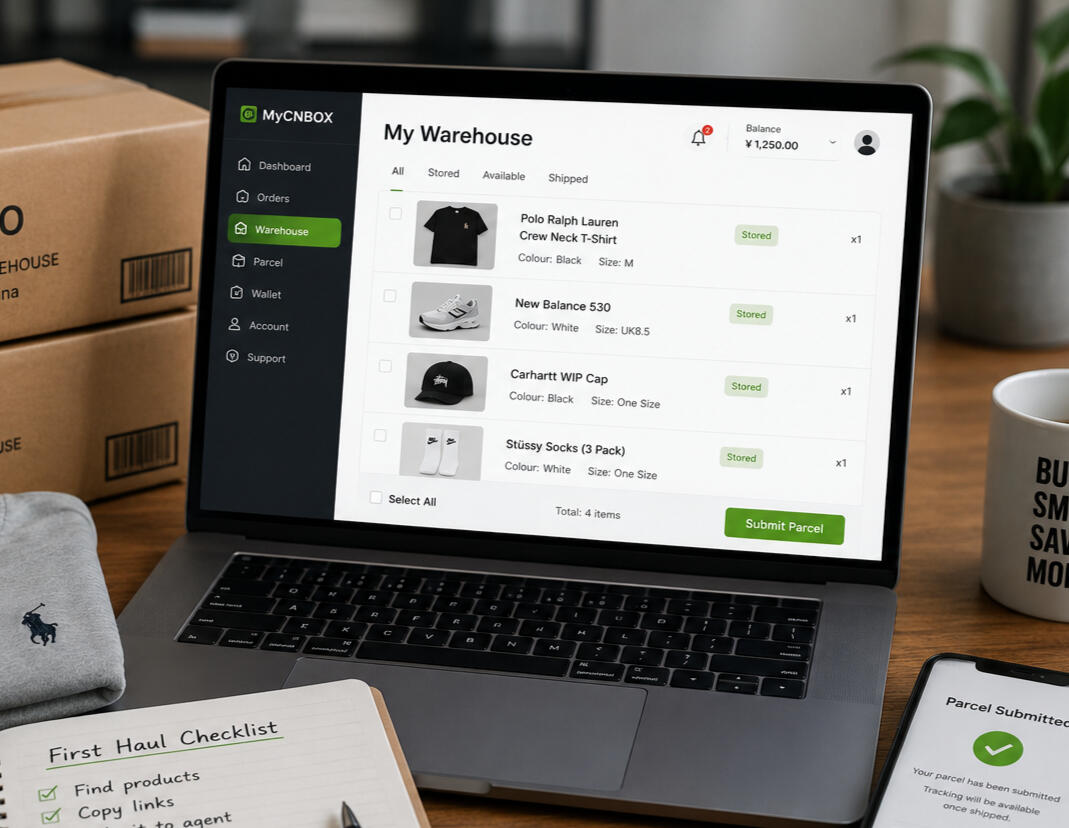
How To Use A Shipping Agent For The First Time
A simple walkthrough of how agents buy items, receive them at the warehouse and prepare your parcel for shipping.
BUYING GUIDE · BEGINNER · 4 MIN READ
How To Choose A Shipping Line
A simple walkthrough of how agents buy items, receive them at the warehouse and prepare your parcel for shipping.
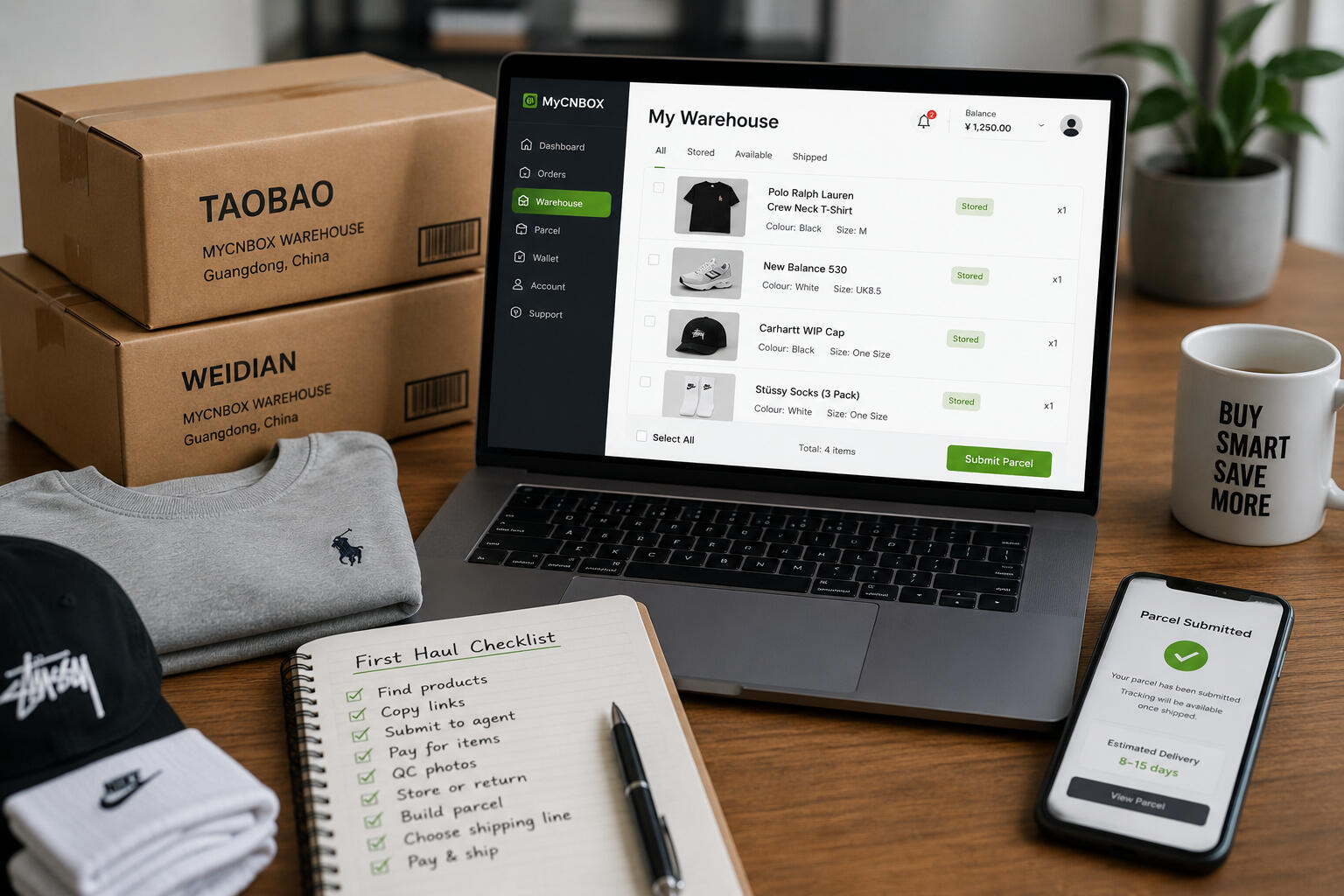
What a shipping agent does
A shipping agent helps you buy from Chinese platforms that may not ship directly to your country.Instead of ordering from the seller yourself, you copy the product link and paste it into your agent’s website. The agent then buys the item in China, receives it at their warehouse and updates your order when it arrives.Once the item is in the warehouse, the agent usually takes quality control photos. These photos help you check the item before you pay for international shipping.The agent can then store your items, combine several orders into one parcel and help you choose a shipping line to your home country.
How the buying process works
The process usually starts on a platform such as Taobao, Weidian or 1688. You find the product, copy the link and send it to your agent.Your agent checks the listing, confirms the price and lets you pay for the item. After payment, the seller sends the item to the agent’s warehouse in China.When the item arrives, you should check the QC photos carefully. Look at the colour, size, label, quantity, obvious damage and whether the item matches the listing.If everything looks acceptable, you can keep the item in the warehouse until you are ready to ship. If something looks wrong, you may be able to ask your agent about a return, exchange or refund.Once you are ready, you select the items you want to ship, build your parcel, choose a shipping line and pay for international delivery.
What to check before shipping
Before shipping, do not just choose the cheapest line automatically. Check the estimated delivery time, restrictions, tracking quality, insurance options and whether the line is suitable for your item type.You should also check the final parcel weight and box size. Shipping cost may be based on actual weight or volumetric weight, so larger parcels can sometimes cost more than expected.Review your QC photos again before submitting the parcel. Make sure the right items are included and consider whether any unnecessary packaging can be removed to reduce weight or volume.You should also check your country’s import rules, customs declaration requirements and whether taxes, duties or handling fees may apply.
BUYING GUIDE · BEGINNER · 6 MIN READ
Is 1688 Cheaper Than Taobao?
If you are trying to buy direct from China, this question comes up a lot.
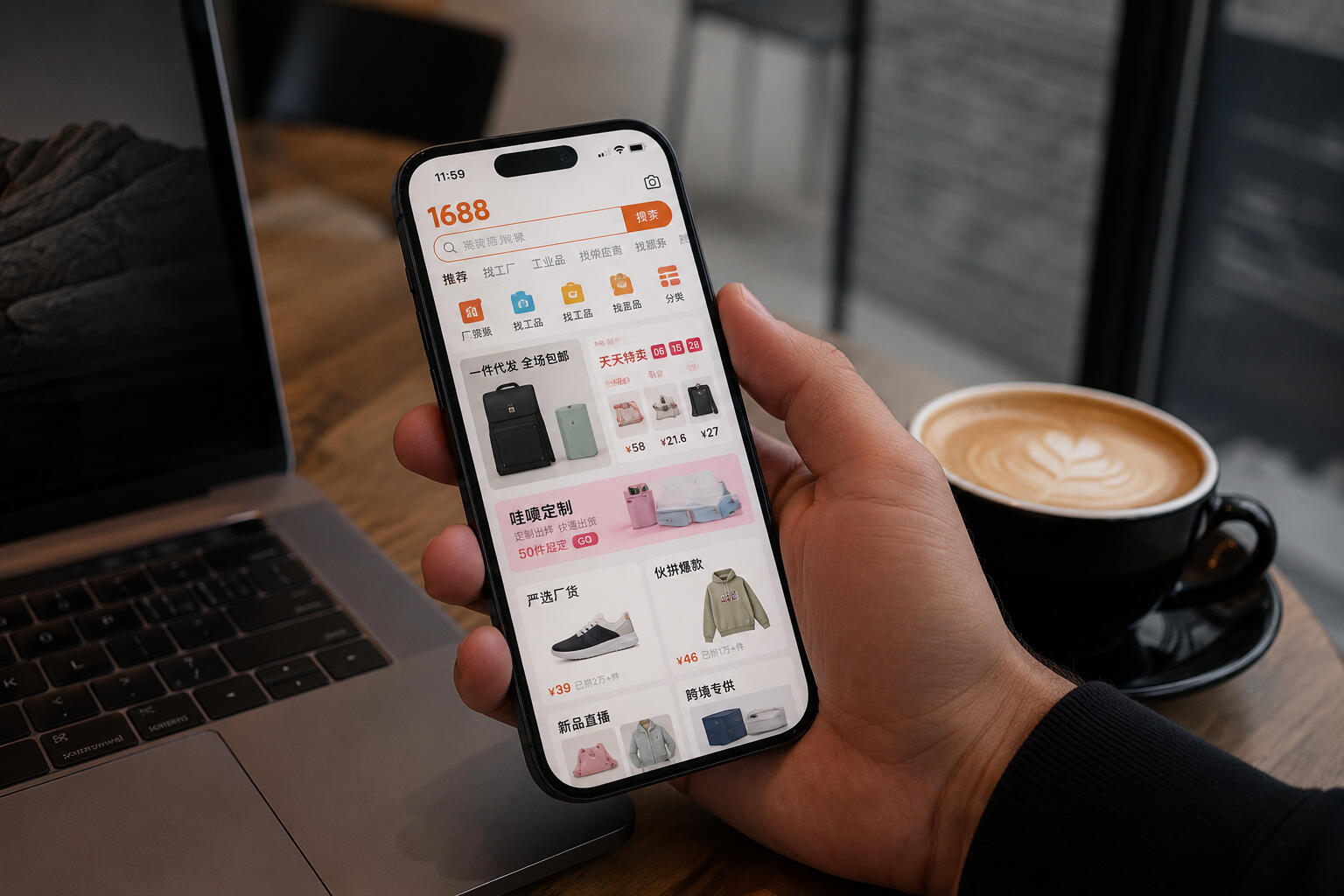
Is 1688 really cheaper than Taobao?
The simple answer is: yes, quite often, but there is a catch.1688 can look much cheaper when you only compare the product price. The problem is that the product price is not the full cost. Once you add minimum order quantities, domestic shipping, agent fees, packaging, international shipping and a bit of risk, the answer becomes less obvious.So, 1688 is often cheaper per item, but it depends what you are buying and how many you need.
What is 1688?
1688 is a Chinese wholesale marketplace.It is mainly used by Chinese businesses, suppliers, resellers and people looking to source products inside China.That is why the prices can look so low. A lot of the time, you are getting closer to the source of the product instead of buying from someone who has already marked it up.But 1688 is not really designed for overseas beginners. It is mostly built for the Chinese domestic market, so if you are ordering from outside China, you will usually need to use a buying agent.
And What is Taobao?
Taobao is more like a huge online shopping centre. It is also Chinese, but it is aimed more at everyday domestic shoppers rather than wholesale buyers.You will find individual sellers, small shops, brands, resellers and all kinds of products.For beginners, Taobao is usually easier to understand than 1688. Listings tend to feel more like normal online shopping, with more photos, reviews and seller ratings.
So is 1688 actually cheaper?
Usually, yes. The product price on 1688 is often lower because many sellers are wholesalers, factories, suppliers or people closer to the supply chain. However, that doesn't mean your final order will be cheaper.There are a few things to watch out for.1. The lowest price may need a bigger orderOn 1688, the cheapest price is often linked to quantity.So you might see something along the lines of:1–2 pieces: higher price
3–10 pieces: cheaper
10+ pieces: cheapestSo if you only want one item, you may not get the very cheapest price shown.Some sellers also have a minimum order quantity. That means you might have to buy two, three or more pieces before they will accept the order.That is fine if you want multiple items, but not ideal if you only wanted one.2. 1688 is better for sourcing, not always casual shoppingThis is the main difference.Taobao is better for browsing and buying one-off items.1688 is better when you are trying to source products, compare supplier prices or buy more than one of something.For example, 1688 can be useful for:accessories
clothing basics
homeware
packaging
small business stock
repeat purchases
group buys
simple products where lots of sellers offer similar versionsIf you are trying to avoid reseller markups, 1688 can be very useful.But if you only want one specific item, Taobao may be simpler.3. Cheaper does not always mean betterThis is important.A cheaper price can be a good deal, but it can also come with more work.On 1688, some listings may have:fewer photos
less detail
fewer reviews
minimum order quantities
more variation between batches
less beginner-friendly seller communicationThat does not mean 1688 is bad. It just means you need to check things properly.This is where your agent matters.Your agent can help place the order, receive the item at their warehouse, take QC photos and help you check whether the product looks right before you ship it internationally.When 1688 is usually better1688 is usually better when you are buying more than one item or when you are trying to find the cheapest source.It works well when you are comparing similar products from different suppliers.For example, if you see an item on a reseller website for a much higher price, you may be able to find something very similar on 1688 for less.It is especially useful if you are buying:multiple pieces
repeat items
simple products
low-cost accessories
stock for a small business
items where you are happy to compare different suppliers
When Taobao is usually betterTaobao is usually better when you want an easier buying experience.It is often the better choice if you are buying:one item
niche fashion
independent Chinese brands
products where reviews matter
products where you want more photos
items where you want a more normal shopping experienceFor a beginner, Taobao is often the easier place to start.Even if the product costs slightly more, it may save you time and confusion.Example: why 1688 is not always cheaper overallLet’s say you find the same type of jacket on both platforms.On Taobao, it costs ¥180.On 1688, it costs ¥120.At first, 1688 looks much cheaper.But then you realise the 1688 seller has a minimum order of two pieces.So now you have to spend ¥240 before you even think about domestic shipping, agent fees or international shipping.If you only wanted one jacket, Taobao might actually be the better option.But if you wanted three jackets, 1688 might be much better value.That is the key point.Taobao is often better for one-off shopping.
1688 is often better for sourcing or buying multiple items.What about quality?1688 is not automatically lower quality.Taobao is not automatically higher quality.Both platforms have good sellers and bad sellers.The difference is that 1688 often needs a bit more checking because it is more supplier-focused.Before buying from 1688, look at:the seller
the product photos
order numbers
available sizes or variants
whether the listing looks complete
whether there is a minimum order quantity
whether your agent can confirm any detailsAnd always pay attention to your QC photos once the item reaches the warehouse.Should beginners use 1688?Yes, but I would not always start there.If you are completely new, Taobao is usually easier.You can learn how agents work, how warehouse photos work, how shipping works and how the whole process feels.Once you understand that, 1688 becomes much more useful.A good approach is:Start with Taobao.
Learn the buying agent process.
Use 1688 to compare prices.
Move to 1688 when the saving is big enough to be worth the extra effort.You do not need to pick one platform forever.Most buyers use different platforms for different things.The better question to askInstead of asking:“Is 1688 cheaper than Taobao?”Ask:“Is 1688 cheaper for this exact product, in this quantity, after all the fees and shipping?”That is what really matters.Sometimes 1688 wins easily.Sometimes Taobao is simpler and works out better overall.Final verdict1688 is often cheaper than Taobao, especially if you are buying multiple items or trying to source closer to the supplier.But do not judge the deal by the product price alone.Before deciding, think about:how many you need
whether there is a minimum order quantity
domestic shipping
agent fees
international shipping
QC photos
returns
how much effort the order needsFor most beginners, the simplest advice is:Use Taobao when you want an easier one-off purchase.
Use 1688 when you want to compare source-level prices or buy more than one item.1688 can definitely save you money, but only when you understand the full cost of the order.
NEWS · 8 MIN READ
UK Import Rules Are Changing: What It Means for Buying Direct from China
UK buyers should pay attention to this.
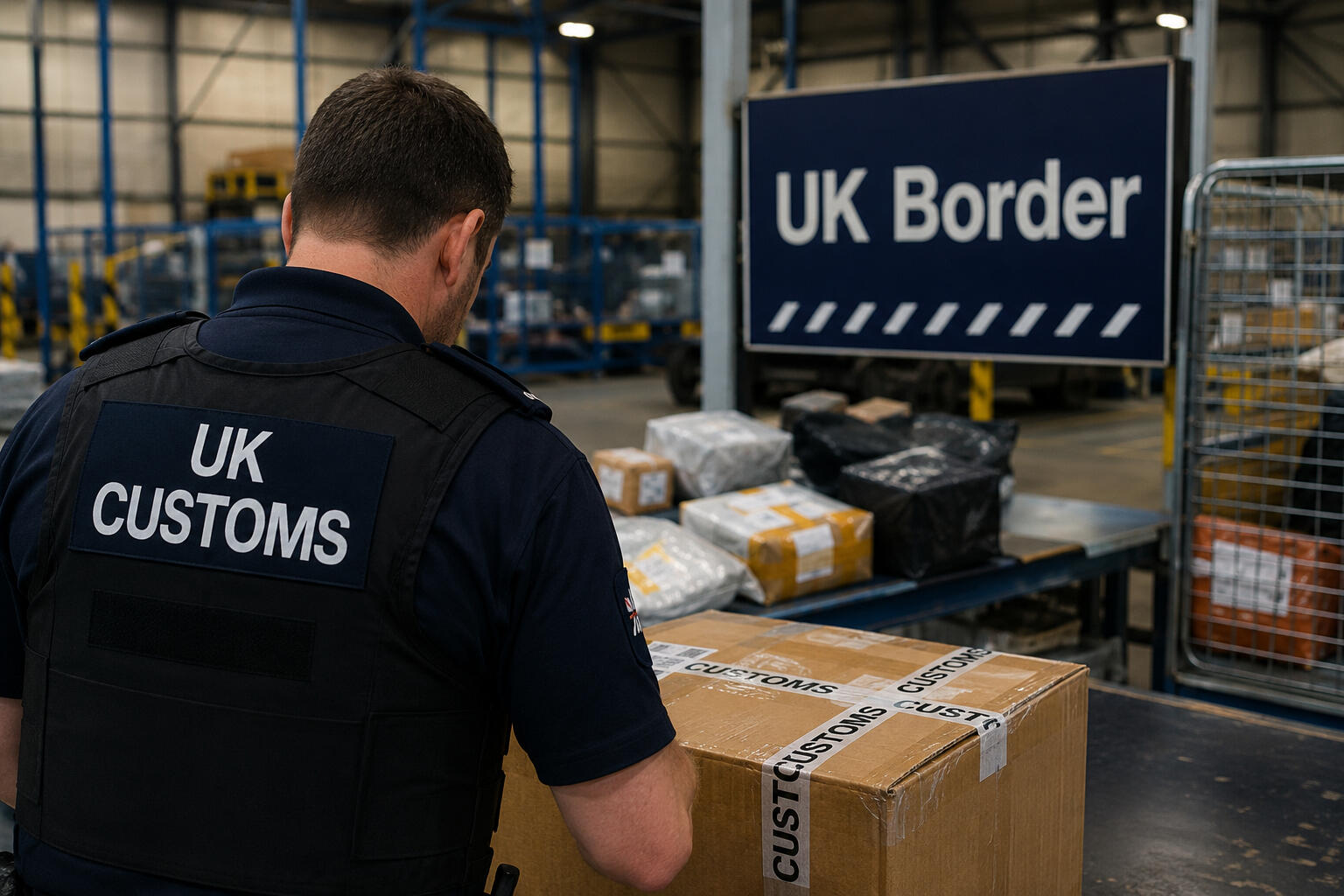
The government has confirmed that it is bringing forward reforms to low-value imports. The current plan is now aiming for October 2028, and the key point is that goods valued at £135 or less may no longer benefit from the customs duty relief they often do now.In plain English, small imported parcels could become more expensive, more closely checked, or at least harder to treat as “cheap and simple” in the way many buyers have become used to.This does not mean buying direct from China is over.But it probably does mean the easy cheap-parcel era is being squeezed.
What is actually changing?
At the moment, many low-value imports enter the UK without customs duty being charged, provided the goods are valued at £135 or less. VAT can still apply, and the rules are already more complicated than people often realise, but the £135 threshold has made small direct-to-consumer parcels easier and cheaper than they might otherwise be.The government now wants to scrap customs duty relief on these low-value imports.The official reason is fairness. UK high street retailers argue that they are at a disadvantage when overseas sellers can send cheap goods directly to UK customers under lighter import treatment. The government is also reviewing how VAT is collected from online sellers using marketplaces.Reuters has linked the issue to the rise of platforms such as Shein, Temu, AliExpress and Amazon Haul. These platforms are built around sending low-cost goods directly from overseas factories or sellers to customers in the UK.That matters because it shows this is not just a small technical tax change. It is part of a wider shift in how the UK is looking at cheap overseas parcels.
What this means for UK buyers
For anyone buying from Taobao, Weidian, 1688, AliExpress, Temu-style sellers, Shein-style sellers, or through warehouse agents, the main point is simple: the item price is only part of the story.A product might look cheap on the Chinese platform, but the real question is what it costs by the time it reaches your door.That means thinking about the product price, domestic Chinese shipping, agent fees, international shipping, VAT, possible customs duty, courier handling fees, and the risk of customs delays or checks.This is what people mean by “landed cost”. It is the real total cost of getting the item into your hands, not just the price shown on the product listing.For some products, buying direct will still make a lot of sense. This is especially true when UK resale markups are high, or when you are buying items that are hard to find locally.For other products, the saving might become much smaller once shipping, tax and risk are included.That is the part buyers need to be honest about.
The risk of bad “workaround” advice
Whenever import rules tighten, people start looking for shortcuts.You will probably see more advice about underdeclaring parcels, splitting shipments, using “tax-free” lines, or trusting sellers who promise that customs will not be a problem.Be careful with that.Customs risk is real. If enforcement attention increases, poor declarations or unrealistic shipping claims could become more of a problem, not less. A bad declaration can lead to delays, extra charges, checks, seizures, or disputes if something goes wrong.The answer is not to panic, but it is also not to pretend the rules do not exist.A better approach is to buy more carefully.Compare the full landed cost against the UK price before ordering. Think about whether the saving still makes sense. Use agents for proper QC, consolidation, packaging choices and clearer shipping options. Be realistic about declarations. Avoid anyone promising a magic customs loophole.That last point matters.An agent can help you organise the buying process. A good agent can buy from Chinese platforms, receive your items, take QC photos, store your goods, consolidate parcels and give you shipping options.But an agent does not remove UK customs rules.The value of an agent is not that they make customs disappear. The value is that they give you more control and visibility before your parcel leaves China.
Why agents may become more useful, not less
It might sound strange, but changes like this could make warehouse agents more useful for serious buyers.If small parcels become more closely watched or more expensive, buyers will need to think more carefully about parcel weight, volume, shipping line, packaging, declarations and consolidation.Sending random parcels one by one with no plan may become less attractive.A more organised approach may become more important.That is where agents can help. They allow you to inspect items before international shipping, combine multiple purchases into one shipment, remove unnecessary packaging, choose between shipping lines and avoid paying international postage on every single item separately.That does not guarantee a cheaper result every time. It does, however, give you a better chance of understanding the full process before committing to the final shipment.For UK buyers, that could become more important over the next couple of years.
Is buying direct from China still going to be worth it?
Yes, but not always.That is the honest answer.Buying direct from China can still make sense where the UK price includes a big reseller markup, where you are buying several items together, or where the product is difficult to source elsewhere.It may make less sense for cheap single items once international shipping, possible duty, VAT and handling fees are included.This is why the next phase of buying direct will probably reward buyers who understand the process rather than buyers who only chase the cheapest product listing.The opportunity is still there, but the calculation is changing.Cheap is not dead. Lazy cheap is.That is probably the simplest way to put it.The government is clearly paying more attention to cheap direct imports. Retailers are pushing for faster action. Platforms built around ultra-low-cost overseas parcels are under the spotlight.For UK buyers, this does not mean you need to stop buying from China.It means you need to stop thinking only in terms of the product price.The buyers who do best will be the ones who understand shipping, customs, declarations, consolidation and landed cost. The buyers who struggle will be the ones who rely on vague advice, unrealistic guarantees or “no tax” claims without understanding the risk.Buying direct from China is not going away.But it is becoming more important to know what you are doing.
Sources
GOV.UK — Government backs high street with acceleration of cheap import reforms and crackdown on dodgy online sellers
https://www.gov.uk/government/news/government-backs-high-street-with-acceleration-of-cheap-import-reforms-and-crackdown-on-dodgy-online-sellersReuters — Britain accelerates plan to end low-value parcel tariff loophole
https://www.reuters.com/business/retail-consumer/britain-brings-forward-levy-low-value-imports-2026-06-23/Yahoo Finance UK — Government pulls forward plan to close small parcel tax loophole
https://uk.finance.yahoo.com/news/government-pulls-forward-plan-close-182300748.htmlTheIndustry.fashion — UK Government backs high street by bringing forward low-value import reforms
https://www.theindustry.fashion/uk-government-backs-high-street-by-bringing-forward-low-value-import-reforms/MSN — UK brings forward small parcel tax loophole closure to 2028
https://www.msn.com/en-gb/news/insight/uk-brings-forward-small-parcel-tax-loophole-closure-to-2028/gm-GMF998801B?gemSnapshotKey=GMF998801B-snapshot-1&uxmode=ruby
advice · 4 MIN READ
What are those parcel extras all about?
We take a look at them, and find out if they're worth the money.
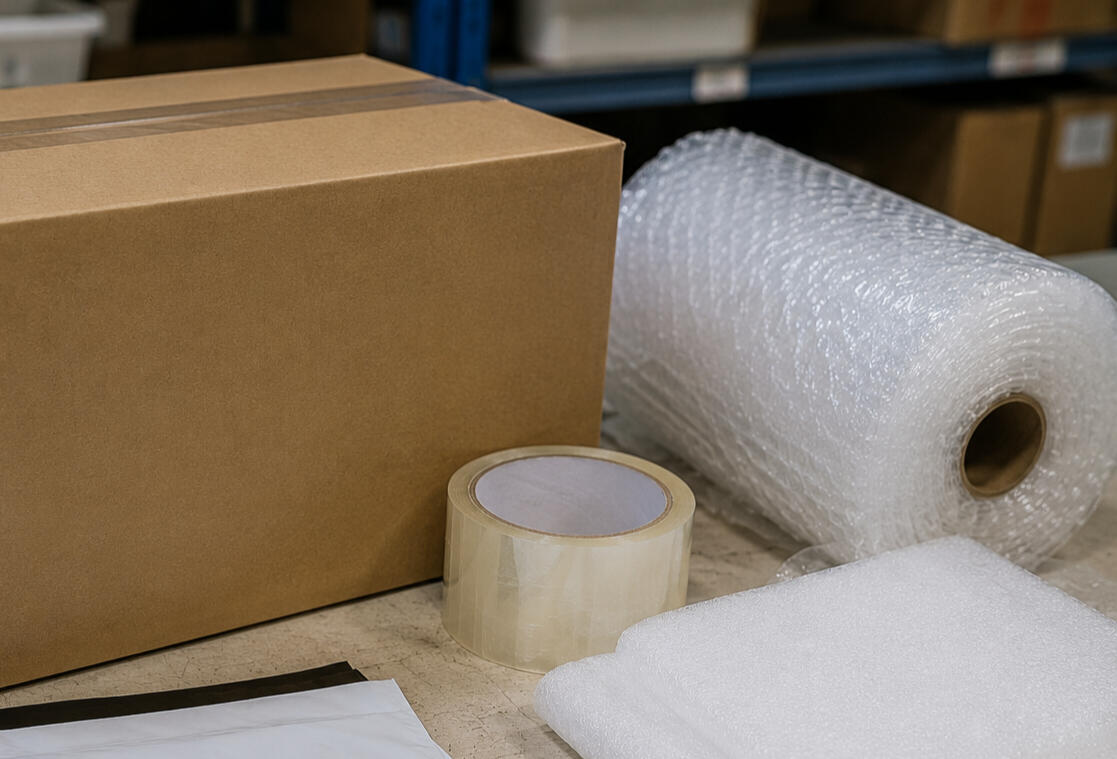
By the time your haul reaches the warehouse, most of the big decisions have already been made. You've found your items, waited for them to arrive, looked through the QC photos and picked a shipping line. Then comes a page that catches a surprising number of buyers off guard. A handful of optional extras appear alongside your parcel. Vacuum packaging. Reinforced boxes. Waterproof wrapping. Corner protection. Insurance.For something that costs relatively little, these options generate plenty of debate.Spend long enough reading Reddit and you'll notice a pattern. There isn't really a "right" combination. It depends far more on what's inside your parcel than how much you've spent on it.Vacuum packaging is probably the easiest one to understand. If your haul is mostly clothing, squeezing the air out of hoodies, T-shirts and joggers can make a surprisingly bulky parcel much smaller. That doesn't always reduce your shipping bill, but if your chosen shipping line prices parcels using volumetric weight, it certainly can.It also explains why buyers shipping trainers often don't bother. Shoes don't compress, so there's very little to gain.Reinforced packaging is another option that tends to divide opinion. Some buyers tick it every time without thinking. Others never bother. In reality, both approaches probably miss the point.A cardboard box full of clothes is already fairly forgiving. Fill that same box with sunglasses, watches, collectibles or anything with presentation packaging, and suddenly a few pounds spent strengthening the parcel feels much easier to justify.Waterproof wrapping is one of those upgrades that rarely gets much attention until someone receives a parcel that has spent several weeks travelling through warehouses, airports and delivery depots in bad weather. Serious water damage isn't common, but many experienced buyers still consider it cheap peace of mind.Corner protection falls into a similar category. If you're hoping your retail shoe boxes arrive looking as though they've just left the shop, those extra cardboard protectors can sometimes make the difference between a crisp corner and a crushed one. If you're throwing the boxes away anyway, you may never notice whether they were fitted.Insurance is perhaps the most misunderstood option of the lot.Many buyers assume it covers anything that might go wrong. That's rarely the case. The level of cover varies between warehouse agents and shipping lines, and the small print matters. Some policies focus on parcels that are lost in transit. Others extend to damage. Very few work exactly as people imagine before they've actually read the terms.Perhaps the most interesting thing isn't which extras buyers choose—it's how their habits change.First-time buyers often tick almost every box, worried they'll regret missing something important. After a few successful shipments, most become much more selective. They start matching the extras to the contents of the parcel instead of treating them as a standard checklist.That's probably the best way to think about these add-ons - they're not upgrades you're expected to buy, but are simply tools for particular situations. For example, a soft clothing haul doesn't need protecting in quite the same way as a box containing expensive eyewear or carefully packed collectibles.So the next time your warehouse agent asks whether you'd like to add a few extras before shipping, it's worth pausing for a moment.Not to ask which options everyone else chooses - but to ask which ones actually make sense for your parcel.
Table 1: Summary of Features
| Service | Why you'd use it | Usually worth it? |
|---|---|---|
| Vacuum packaging | To reduce bulky clothing volume | Yes — for clothing hauls |
| Reinforced box | Extra protection for fragile items | Yes — if shipping shoes, eyewear or collectibles |
| Waterproof wrapping | Protection from moisture during transit | Usually |
| Corner protection | To preserve retail boxes | Only if the boxes matter to you |
| Insurance | Cover certain shipping risks | Read the policy first |
| Remove packaging | Save space and reduce weight | Often |
article · 6-8 MIN READ
Everyone Is Still Asking for the Best Warehouse Agent. That May Be the Wrong Question.
There is a particular kind of post that keeps appearing in buying-from-China communities.

It usually starts with someone saying they have not ordered for a while. Sometimes they mention 2024. Sometimes they mention Pandabuy. Sometimes they just say they are out of the loop. Then comes the question everyone recognises.Which agent is best?On the surface, it is a simple request. Buyers want a name. They want someone to say Superbuy, Sugargoo, CSSBuy, GTBuy, OopBuy, Mulebuy, MyCNBox, Basetao, or whichever agent happens to be popular that week. But the question is not really simple anymore.In recent Reddit discussions, buyers have asked for the best agents in 2026 based on price, UI and security. Others have asked which agents are worth using after taking a break from buying. Another thread from r/1688 asked for a platform-based agent recommendation, while also mentioning mixed impressions around OopBuy and Sugargoo pricing. A separate r/rep discussion had a buyer saying they previously used CNFans but felt it had become poor, and wanted a better option for a shoe order. These are not isolated curiosity posts. They point to a market where buyers are still trying to rebuild trust. That is why “best agent” is often the wrong starting point. A better question is: best for what?A buyer shipping one pair of shoes to the UK does not need the same thing as someone building a 12kg clothing haul to Germany. A small business ordering from 1688 does not need the same service as a first-time buyer copying a Weidian link from Reddit. Someone who cares about perfect QC photos will judge an agent differently from someone who only wants the cheapest shipping line that still arrives.Warehouse agents look similar from the outside because they all sit in roughly the same part of the buying process. They help you buy from Chinese platforms, receive items into a warehouse, provide some level of inspection, consolidate parcels and arrange international shipping. But the buyer experience can feel very different depending on the parcel, the country, the shipping line and what happens when something goes wrong.That last part matters more than people admit.When everything works, most agents look fine. The item arrives at the warehouse. The photos are acceptable. The parcel ships. The tracking updates. The box arrives.The real test is what happens when the seller sends the wrong size, a parcel gets stuck, the QC photos are unclear, the shipping estimate changes, or the buyer needs support from someone who actually understands the issue. That is where the “best agent” question starts to fall apart.Some buyers care most about price. That is understandable. Shipping costs can easily change whether a haul feels worthwhile. A few pounds saved on each parcel adds up, especially for regular buyers. But price alone can be misleading. An agent can look cheap at the buying stage and feel expensive once international shipping, exchange rates, service fees and parcel extras are included.Other buyers care about the interface. That sounds less serious, but it matters. A cleaner platform can reduce mistakes, especially for beginners. If the order flow makes sense, QC photos are easy to find, parcel submission is clear and support messages are not buried, the whole process feels less risky. A clumsy interface can turn a simple haul into a guessing game.Then there is QC.Quality control photos are one of the main reasons buyers use warehouse agents instead of shipping blindly. They are not a guarantee of product quality, but they are a useful pause between purchase and international shipping. If the colour is wrong, the logo is misaligned, the size label looks suspicious or the item is clearly damaged, QC photos give the buyer a chance to act before paying for international delivery.A few clear photos in good lighting can be more useful than a large batch of poorly framed images. Extra QC photos can help, but only if the agent actually photographs the detail the buyer needs. Some recent community posts mention QC as part of agent experience, including one FashionReps agent review that noted QC handling for forwarded items required more deliberate action from the buyer. That kind of small operational detail can matter more than the agent’s headline reputation.Shipping is even messier.Buyers often talk about “cheap shipping” as if it were one fixed thing. It is not. Shipping depends on country, parcel weight, volumetric weight, item category, line restrictions, customs handling, delivery speed and whether the buyer wants tax-free or triangle-style routing. One Reddit discussion on 1688 shipping shows buyers asking whether paid help choosing shipping through Superbuy makes sense, which points to a wider issue: many people do not just need a parcel sent. They need help choosing the least-bad shipping option for what they are sending. This is where newer buyers often get caught.They ask for the cheapest agent. What they actually need is the cheapest reliable route for their country and parcel type, and those are different things.An agent with a low service fee can still be a poor fit if its shipping options are weak for your destination. A more expensive agent may still be better value if it offers better line choice, clearer handling, better support and fewer surprises. That does not mean expensive is automatically better. It means the final cost is not visible in one number.For 1688 buyers, the question becomes even broader.A Reddit thread in r/1688 described a reliable agent as someone coordinating sourcing, purchasing, quality control, warehousing and shipping, with different needs for wholesale buyers, Shopify sellers, Taobao buyers and brand owners. That is a useful distinction. Some people need a shopping agent. Others need a sourcing and logistics partner. Lumping both into the phrase “best agent” makes the discussion less useful.A casual buyer wants convenience. A reseller wants consistency.A business buyer may want supplier negotiation, inventory handling, custom packaging, regular fulfilment or freight options. For them, the best agent might not be the one with the slickest app or the lowest Reddit hype. It may be the one that can actually handle repeat orders without creating extra admin.There is also the trust problem.After the disruption in the replica-buying world in 2024, many buyers became more cautious. You can see that caution in the wording of current posts. People are not simply asking which agent is fastest. They are asking who is safe, who has decent customer service, who accepts familiar payment methods, who is still being used by real buyers, and who should be avoided, and that caution is healthy.But Reddit recommendations have limits.A positive review may be real, but it is still one person’s parcel. A negative review may be fair, but it may also involve unrealistic expectations, a difficult shipping line, a restricted item or a buyer who did not understand the process. Community feedback is valuable, but it works best when you look for patterns rather than single comments.One good review does not prove an agent is good, and one bad review does not prove an agent is bad - but a pattern of unclear fees, poor support, missing parcels or bad QC is different - that is worth paying attention to.The same applies to praise. If multiple buyers in different countries consistently mention clear communication, reliable QC, fair shipping estimates and smooth refunds, that tells you more than a discount code or a leaderboard ever will.Official information helps, but it only answers part of the question. Superbuy’s own fee guide says value-added services are optional and includes services such as inspection, insurance and reinforced packaging. Its forwarding guide also refers to package removal, package reinforcement and insurance as additional services buyers can request. CSSBuy’s forwarding page describes vacuum packaging as a way to reduce volume weight for parcels with many clothes. These details are useful because they show what services exist, but they do not tell you how good the service feels when a real parcel is delayed or something goes wrong.That is the gap buyers are trying to fill with community discussion.They are not just shopping for a warehouse.They are shopping for confidence.So what should buyers ask instead?Start with the parcel.What are you shipping? Clothing, shoes, electronics, eyewear, bags, accessories, business stock or a mixed haul? Soft clothing gives you more flexibility. Fragile or boxed items make QC and packaging more important. Restricted or awkward items make line choice more important.Then ask about country.Which agents have good recent shipping options to your destination? A buyer in the UK, Germany, Brazil, Australia or Norway may get very different answers. A recommendation from someone in another country can still be useful, but it may not apply cleanly to your route.Then ask about risk.Are you comfortable using a newer agent if the price is lower? Do you prefer an established name even if it costs more? Do you want PayPal or another familiar payment method? Do you care about insurance? Would poor customer service make you anxious, or are you happy to manage problems yourself?Finally, ask about evidence.Has the person recommending the agent used it recently? What country did they ship to? What was the parcel weight? What line did they use? Were there problems, and if so, how did the agent deal with them?Those questions produce much better answers than “who is best?”They also make the community more useful.Instead of another thread full of agent names, buyers can start building comparisons based on real use cases: small UK clothing haul, EU shoe haul, Brazil budget parcel, 1688 business order, fragile accessory shipment, first-time beginner order.That is the direction China Buy Direct should push the conversation.Not towards one winner.Towards better questions.Because in 2026, the best agent is rarely the one with the loudest recommendation. It is the one that fits your parcel, your country, your budget and your tolerance for risk.That answer is less exciting than a name.But it is much more useful.
article · 7-8 MIN READ
The China Buying Calendar: When to Build a Haul, When to Wait, and When Shipping Slows Down
Most buyers learn the China calendar the hard way.
They place an order, wait for the seller to dispatch, watch the domestic tracking move slowly, then wonder why their warehouse agent has not checked the item in yet. Or they submit a parcel just before a major holiday and spend the next week refreshing tracking that barely changes.
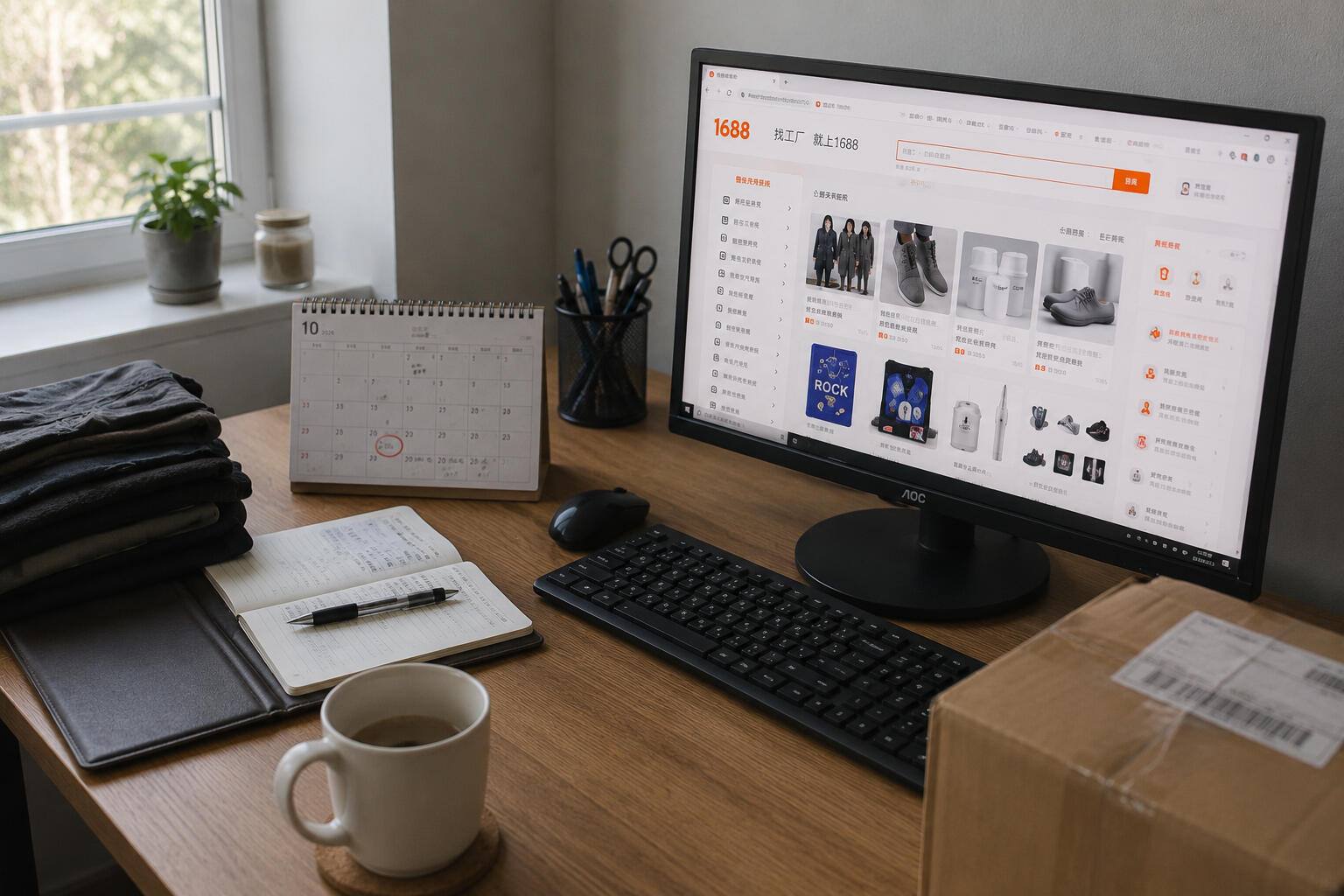
It feels like an agent problem. Sometimes it is.But often, the timing is simply bad.Buying from China is not just a matter of finding the right product and choosing a shipping line. The whole process sits inside a wider calendar of public holidays, shopping festivals, seller behaviour, factory schedules, courier backlogs and international logistics pressure. If you understand that calendar, you can plan hauls more intelligently. If you ignore it, even a good agent and a good shipping line can feel slow.This matters whether you are buying from Taobao, Weidian, 1688 or through a warehouse agent. The parcel you eventually receive in the UK, Europe, Australia or elsewhere has already gone through several stages before it ever becomes an international shipment. The seller has to dispatch it. A domestic courier has to deliver it to the warehouse. The warehouse has to check it in. QC photos have to be taken. The parcel has to be packed, weighed, submitted, handed over to a shipping provider and processed for export.A holiday can affect any one of those steps, and a major shopping event can affect several at once.That is why haul timing matters more than people think.The Mistake Buyers MakeA lot of buyers only start counting from the moment they submit their international parcel.That is understandable. It is the point where the haul feels “real”. The order has arrived at the warehouse, the QC photos are done, and the buyer has paid for shipping.But the buying timeline starts much earlier.If you buy during a big sale, the seller may take longer to dispatch. If the domestic courier network is congested, the item may take longer to reach the warehouse. If thousands of other buyers are also sending items to warehouses at the same time, check-in and QC can slow down. If everyone submits parcels just after a holiday, export handling can become busier too.None of this means buyers should avoid sales or holidays entirely. That would be unrealistic. Some of the best prices appear during major shopping events.The point is to know what you are trading.Sometimes you are getting a better price in exchange for a slower process.Public Holidays: When China Slows DownThe two upcoming 2026 public holiday periods that buyers should know about are Mid-Autumn Festival and National Day.Mid-Autumn Festival runs from 25–27 September 2026. It is a short public holiday, and for most buyers it is likely to mean a modest slowdown rather than a major disruption. Sellers may reply more slowly. Domestic couriers may be less predictable. Warehouses may operate with reduced staffing or slightly delayed processing, depending on the agent.The bigger one is National Day / Golden Week, which runs from 1–7 October 2026. China Briefing lists this as a seven-day holiday, with adjusted working days around it. For buyers, this is the period to treat more seriously. A full week holiday can affect factories, sellers, domestic logistics, warehouse staffing and export handling.Golden Week is not the same as Chinese New Year, but it can still make the buying process feel slow.If you are planning a haul in late September or early October, the safest approach is not to leave time-sensitive orders until the last minute. If you want items checked into the warehouse before Golden Week, order early enough for sellers to dispatch before the holiday pressure starts. If you submit a parcel just before or during the holiday, expect slower movement.The same rule applies after the holiday. Everything does not instantly restart at full speed the following morning. Sellers catch up. Couriers catch up. Warehouses catch up. Logistics networks clear backlog.That lag is where buyers often get frustrated.Shopping Festivals: Good Prices, Slower MovementPublic holidays slow things down because people stop working.Shopping festivals slow things down because everyone starts buying.China’s e-commerce calendar has several major sales periods, but three matter most for international buyers: 618, Singles’ Day and Double 12.The 618 Shopping Festival is associated with JD.com’s anniversary and is widely treated as a major mid-year e-commerce event. WPIC describes it as running from 1 June to 18 June, with large-scale promotions across China’s e-commerce market.Singles’ Day / Double 11 falls on 11 November every year and has become China’s best-known online shopping festival. China Highlights describes it as the biggest online shopping festival in the world.Double 12 follows on 12 December. It is generally smaller than 11.11, but still part of the wider year-end shopping cycle.For buyers using agents, these events can be useful. Sellers may discount products. Platforms may offer coupons. Some categories may become more competitive. If you are already planning to buy, timing purchases around a major sale can make sense.But there is a catch.A lower item price does not always mean a smoother haul.During sales periods, sellers may receive far more orders than usual. Dispatch can slow down. Popular sizes or colourways may sell out. Warehouses may receive more parcels than usual. QC may take longer. Some buyers may submit larger hauls because they have bought more during the sale, which can increase parcel processing pressure.There is also the question of whether the discounts are as good as buyers assume. Reuters reported that smartphone sales during China’s 2026 618 festival fell 13% year-on-year, partly because rising memory costs limited the ability of brands to offer stronger discounts. That does not mean 618 is bad for buyers, but it is a useful reminder that shopping festivals do not automatically produce huge savings in every category.The smarter approach is to use sales strategically.Build a wishlist beforehand. Know the normal price before the sale starts. Do not assume every discount is meaningful. Expect slower dispatch. Leave more time for warehouse processing.That is how you benefit from the event without being surprised by the backlog.Chinese New Year: The Big OneChinese New Year, also known as Spring Festival, is the holiday buyers should plan around most carefully.For 2027, current public holiday listings show Spring Festival running from 5–11 February, with Chinese New Year itself on 6 February. These dates are useful for planning, although buyers should still check official announcements closer to the time.The important thing is that the disruption does not only happen during the official holiday.Factories, sellers and logistics providers may begin slowing before Spring Festival. Workers travel home. Factories reduce output. Sellers may stop accepting new orders or delay dispatch. Couriers become busy. Warehouses and freight providers may operate with reduced capacity. After the holiday, the restart can also take time as staff return and backlogs are cleared.Some supply-chain guides describe the wider Chinese New Year disruption as lasting several weeks because of pre-holiday rush, reduced capacity and post-holiday recovery. Ship4wd notes that the period leading up to Chinese New Year is a frantic logistics season, with exporters rushing to move goods before the holiday and shipping capacity becoming tighter.For a casual buyer, this means one simple thing: do not build a time-sensitive haul too close to Chinese New Year.If you need items by a particular date, buy earlier than feels necessary. If your items have not reached the warehouse before the slowdown begins, they may sit with the seller or domestic courier longer than expected. If they are in the warehouse but not submitted for international shipping, the parcel may wait behind holiday backlog.Chinese New Year is not a one-week inconvenience. It is a seasonal logistics event.
The Haul Planning Calendar
| Period | What buyers should expect |
|---|---|
| Late September 2026 | Mid-Autumn Festival may create short seller, courier or warehouse delays. |
| 1–7 October 2026 | National Day / Golden Week is a bigger slowdown. Avoid urgent parcels where possible. |
| Late October / early November 2026 | Start preparing wishlists for 11.11 rather than buying impulsively. |
| 11 November 2026 | Singles’ Day can bring deals, but also slower dispatch and more warehouse volume. |
| 12 December 2026 | Double 12 may create another smaller sales-driven bump in orders. |
| January 2027 | Start treating Chinese New Year as a serious timing factor. |
| 5–11 February 2027 | Spring Festival public holiday period. Expect wider slowdown before and after. |
This does not mean you should stop buying during these periods.It means you should adjust expectations.If you are not in a hurry, shopping festivals can be useful. If you are trying to hit a deadline, they can be risky. If you are building a large haul, it may make sense to buy early, let items arrive at the warehouse, and wait until the holiday pressure has passed before submitting the international parcel.There is no perfect rule, because different agents, sellers and shipping lines handle pressure differently.But the calendar gives you context.What This Means For Warehouse-Agent BuyersWarehouse agents cannot fully escape China’s calendar.A good agent can process parcels efficiently, communicate clearly and offer sensible shipping options. But it cannot make a seller dispatch during a holiday. It cannot remove congestion from domestic courier networks. It cannot prevent national shopping events from creating more warehouse volume. It cannot make customs or export handling move faster if the wider network is backed up.This is why buyers should be careful about blaming agents for every delay.Sometimes an agent really is slow.Sometimes the entire system is busy.The difference matters. If several buyers are reporting delays across different agents at the same time, the cause may be seasonal rather than agent-specific. If only one agent seems to be struggling while others are moving normally, that is a different story.For China Buy Direct readers, the useful habit is to check the calendar before assuming the worst.Are you ordering near Golden Week?
Are you submitting a parcel after 11.11?
Are sellers slowing down before Chinese New Year?
Has a major sales event just created more warehouse volume?Those questions often explain a lot.The Best Way To Use Sale PeriodsThe best buyers do not ignore 11.11 or 618. They prepare for them.A sensible approach is to build a wishlist before the event begins. Save product links. Note normal prices. Decide which items are worth buying only if the price drops. Keep an eye on seller reputation. Avoid last-minute impulse orders from sellers you have not checked.If a discount appears genuine, buy it.Then be patient.Do not expect sale-period orders to move like normal midweek purchases in a quiet month. Sellers may take longer. Domestic delivery may be slower. Warehouses may be busier. QC may not appear as quickly as usual.That does not make the sale worthless. It simply means the saving comes with a slower buying cycle.For bigger hauls, it may also be worth splitting the process. Buy during the sale, let items arrive at the warehouse, check QC carefully, then choose the best shipping moment rather than rushing to submit everything during peak congestion.The cheapest buying day is not always the best shipping day.Planning Beats PanicThe China buying calendar is not complicated once you see the pattern.Public holidays slow the system because people are away. Shopping festivals slow the system because everyone is ordering. Chinese New Year slows the system because factories, sellers, couriers, warehouses and logistics providers all feel the pressure at once.None of this should put buyers off.It should make them better prepared.If you are building a casual haul, you can use the calendar to save money and avoid frustration. If you are buying for a deadline, you can avoid the worst weeks. If you are comparing agents, you can separate seasonal delays from service problems. If you are writing off a parcel as “stuck”, you can first ask whether the timing explains it.Buying from China rewards patience, but it rewards planning even more.The buyers who understand the calendar are usually the ones who panic least.
article · 8-9 MIN READ
Why Your Tracking Looks Stuck: What Actually Happens After Your Parcel Leaves the Warehouse
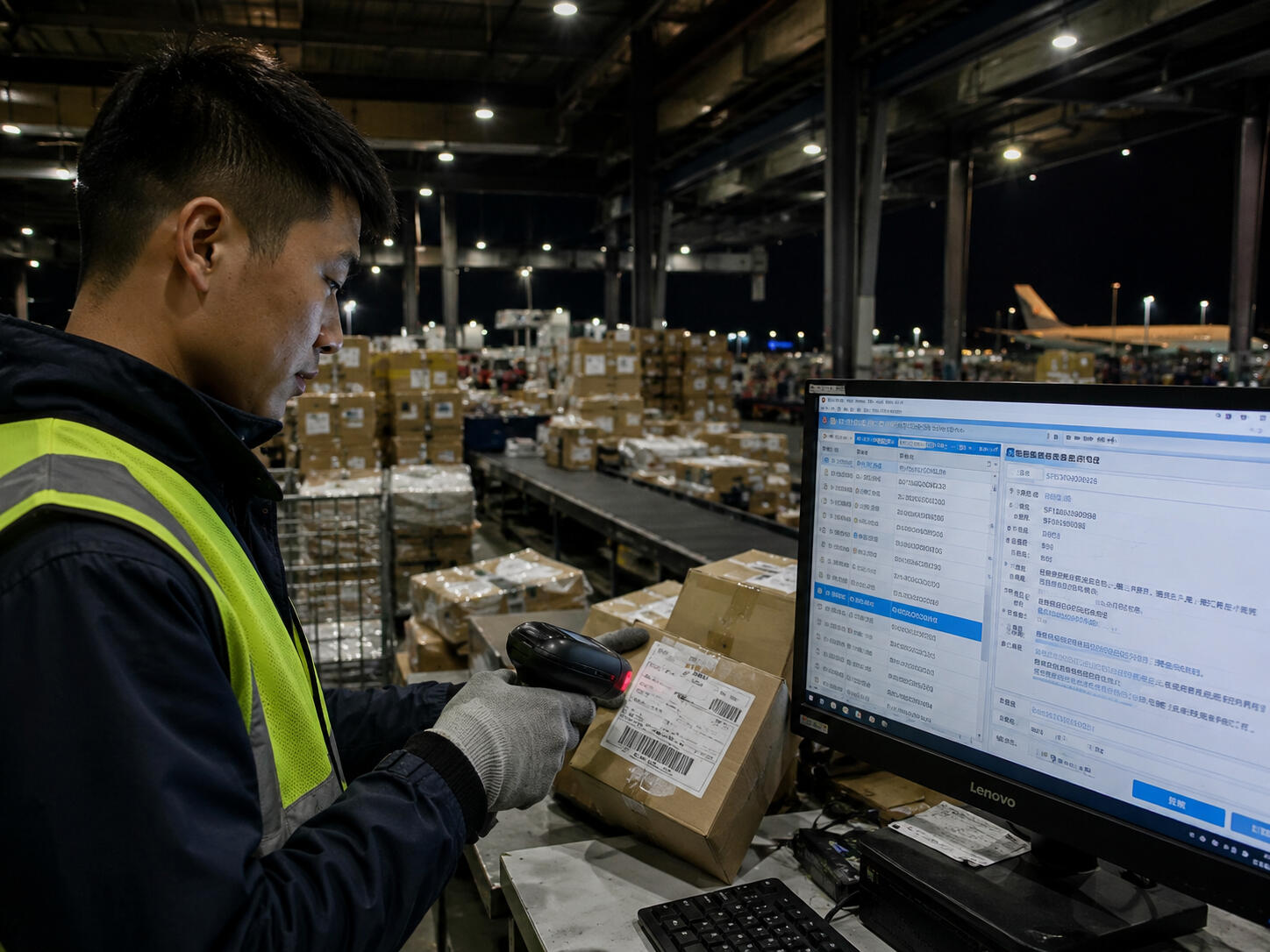
There is a particular moment in almost every China haul where buyers start refreshing tracking too often.The parcel has left the warehouse. The agent says it has shipped. A tracking number appears. Maybe it works on 17Track. Maybe it doesn’t. Maybe the agent’s own system shows movement, but the public tracker says nothing useful.Then the parcel seems to stop.For two days. Four days. Sometimes longer.This is where people start asking whether the agent has actually shipped it, whether customs has seized it, whether the parcel has been lost, or whether the tracking app is broken.Sometimes there is a real problem.More often, the buyer is watching a messy international logistics chain through a tiny keyhole.Tracking is not live GPS. It does not follow the parcel second by second. It updates when somebody scans the parcel, when a logistics system shares a status, or when a tracking platform receives new carrier data. If none of those things happens, the parcel can be moving while the tracking looks dead.That one idea explains most of the frustration.A tracking app does not know what the parcel is doing. It only knows what the carrier has told it.“Shipped” doesn’t always mean “on a plane”When a warehouse agent marks a parcel as shipped, many buyers imagine it has left China already.That is rarely the safest assumption.Depending on the agent and shipping line, “shipped” might mean the parcel has been packed, labelled, weighed, submitted to the line provider, collected from the warehouse, or scanned into a domestic logistics network. It may still be in China. It may not yet have reached an export airport. It may not even be visible to the final international carrier.This is one reason tracking can feel slow at the beginning. The warehouse agent is only one part of the chain. Once the parcel leaves the warehouse, it may be handled by a line provider, freight forwarder, postal operator, commercial courier, or a combination of several providers.The public tracking number may not become useful immediately.Some lines use internal numbers at first. Some tracking numbers only become active after the parcel reaches a carrier hub. Some are recognised by 17Track or ParcelsApp before the official local courier sees anything. Some do the opposite.That does not make the tracking fake. It means the data is fragmented.The first hidden stage: domestic movement inside ChinaAfter leaving the warehouse, a parcel may move through China before it ever becomes an international shipment.That could mean travelling from the warehouse to a logistics provider, a sorting centre, an export hub, an airport handling facility, or a cross-border e-commerce processing centre. The exact route depends on the agent, the line, the destination country, parcel type, weight, restrictions and price tier.A parcel does not always move directly from a warehouse to an international flight.It may first be consolidated with other parcels. It may be bagged. It may be held until the line provider has enough volume. It may move to another city for export. It may wait for electronic customs data to be processed before airline handover.This is where tracking often looks vague.You might see phrases like “departed facility”, “arrived at processing centre”, “delivered to carrier”, “shipment information received”, or “waiting for pickup”. Some of those statuses describe real physical movement. Others simply mean a label or data record has been created.That difference matters.A parcel can have a tracking number before it has meaningfully entered the transport network.Export handling happens before your country ever sees the parcelBuyers tend to think of customs as something that happens when a parcel arrives in the UK, EU, US or wherever they live.That is only half the story.International parcels also need export-side processing. Postal operators, courier companies and cross-border line providers need customs information and electronic shipment data before parcels can move through international networks. The Universal Postal Union says designated postal operators are required to capture and exchange electronic advance data for international postal items under UPU regulations.This is not just paperwork for the sake of it. Customs authorities increasingly expect parcel data before goods move across borders. EMS has also noted that electronic advance data transmission is mandatory under UPU regulations, and that shipments without EAD may face delayed customs acceptance or denial of entry in some cases.For buyers, the practical effect is simple: a parcel can be delayed before it leaves China because the export process is not just “put it on a plane”.There may be declaration data, security screening, export customs, carrier acceptance and airline handover. Some of that appears in tracking. Some of it does not.That is why a parcel can look stuck in China even after the agent has done its part.The airline handover dead zoneOne of the most misunderstood tracking phrases is “handed over to airline”.It sounds like the parcel is about to fly.Sometimes that is true. Sometimes it means the parcel has entered the air transport process but still has not produced another public scan. China Postal Tracking has several examples of buyers asking about parcels stuck after “handed over to airline”, with replies explaining that there may be no further update until the parcel reaches the destination country.That is the dead zone many buyers recognise.The parcel may have cleared an export stage. It may have been handed to a carrier. It may be waiting for a flight. It may be in a container or sack. It may be passing through a transit country. It may have landed but not yet been scanned by the next system.From the buyer’s side, all of those situations can look the same.No update.This is where tracking language becomes dangerous, because it sounds more precise than it really is. “Handed over to airline” does not always tell you exactly where the parcel is at that moment. It tells you which stage the tracking system thinks it has reached.There is a difference.Why parcels sometimes go through other countriesNot every China parcel travels directly from China to the destination country.Some lines use transit hubs. A parcel may move through Hong Kong, Singapore, the Netherlands, Belgium, Germany, the Middle East or another logistics point before reaching the final destination. The route depends on the shipping line, available capacity, tax arrangements, customs handling and final-mile courier setup.This can confuse buyers when tracking shows a country they were not expecting.A parcel going through a third country does not automatically mean it has gone wrong. China Postal Tracking has described some parcels as transshipment items moving from the origin country to a mediator country before the destination.For warehouse-agent users, this is especially relevant with tax-free, triangle, postal and economy lines. The line name may not tell the whole route. The buyer sees a clean shipping option at checkout, but behind it there may be several handovers.That is normal.It is also why tracking can look inconsistent. One carrier may show export movement. Another may show only destination-country arrival. A third may not recognise the number until the final-mile handover.Arrival customs is another quiet patchOnce a parcel reaches the destination country or region, it still may not be close to delivery.It may be waiting for import customs. It may be assessed for tax or duty. It may be transferred from an airport handling facility to a postal operator. It may sit with a commercial clearance provider before moving to the final courier.This is the second big tracking dead zone.A status such as “arrived at destination country” feels like the parcel is almost there. Sometimes it is. Sometimes it still has several steps left.In the UK, for example, the parcel may still need to enter Royal Mail, Parcelforce, Evri, DPD or another local courier network. In the EU, recent low-value parcel rule changes have made customs handling even more visible for buyers using some routes. In the US, USPS, FedEx, UPS or another local provider may only show meaningful tracking after handover.This is why the local courier website may say nothing while 17Track or ParcelsApp shows movement from the international carrier.Or the other way around.Neither tracker is necessarily wrong. They may simply be looking at different parts of the chain.The strange translations that make tracking look worse than it isBad tracking translations cause unnecessary panic.A good example is “dismantling the board”.That phrase appears in some China parcel tracking translations and sounds absurd in English. Buyers have posted about statuses such as “dismantling the board” or “panels are being dismantled”, worrying that the parcel is stuck, opened or being seized. Public Reddit examples show buyers asking what this means when tracking has been translated from Chinese phrases such as “清关放行,拆板中”.The likely issue is literal machine translation.In a logistics context, “拆板” is better understood as breaking down or unloading cargo from a pallet, board or air cargo unit. In plain English, the parcel is likely in a bulk shipment that is being unloaded, separated or sorted before the next stage. It does not usually mean someone is dismantling the parcel itself.One public translation example renders “航班到达 拆板清关中” as “The flight arrives in the process of dismantling the board and clearing customs.” That sounds strange, but the underlying meaning is much closer to: the flight has arrived, the cargo is being broken down, and customs clearance is in progress.This is exactly why tracking should be read carefully.Some statuses are written for logistics staff, not ordinary buyers. Some are translated automatically. Some are copied from carrier systems that were never designed to be reassuring.A few common examples:
| Tracking phrase | What it usually means |
|---|---|
| Handed over to airline | The parcel has entered the air transport stage, but may not show another scan until later. |
| Departure from outward office of exchange | Export-side postal processing has moved towards international departure. |
| Awaiting customs clearance | The parcel or its data is waiting for customs processing. |
| Dismantling the board | Cargo is likely being unloaded or broken down from a bulk unit before sorting/customs. |
| Delivered to carrier transport | The parcel has been handed from one provider to another transport stage. |
| In transit to next facility | Generic movement status; often used when no more detailed scan is available. |
| Arrived at destination processing centre | The parcel has reached a hub, but not necessarily the final courier depot. |
The key point is that tracking language often sounds more dramatic than the event actually is.17Track, ParcelsApp and official courier trackingTracking apps are useful, but they are not magic.17Track describes itself as a global package tracking platform and says it supports thousands of carriers worldwide, including postal carriers, express couriers and China e-commerce carriers. Its own carrier pages refer to support for more than 3,300 carriers, while app listings commonly describe support for more than 2,500 carriers.ParcelsApp says it can track packages with multiple carriers at once and look for updates across possible courier and postal companies.Both are useful because China parcel routes often involve more than one carrier.But they still depend on carrier data.If no carrier has scanned the parcel, the app cannot create an update. If the line provider does not push data quickly, the app may look behind. If the final-mile courier has not received the parcel yet, its website may show “we’re expecting it” or nothing at all.The best approach is usually to check three places:First, the agent’s own tracking page. This may show early internal updates before public trackers recognise the number.Second, a multi-carrier tracker such as 17Track or ParcelsApp. These are useful when the parcel changes carrier or the buyer does not know who has it.Third, the final-mile courier once the parcel reaches the destination country. At that stage, the local courier may become more accurate than the international tracking page.No single tracker is perfect for the whole journey.When to wait and when to askThere is no universal waiting time because shipping lines vary so much. A premium courier line, economy air line, postal line and sea route should not be judged by the same clock.Still, there are some sensible habits.If tracking is quiet for a few days after warehouse dispatch, that can be normal. The parcel may still be moving through domestic logistics or waiting for export processing.If it sits for a week, check for obvious external factors: Chinese public holidays, typhoons, customs rule changes, route suspensions or sales-event backlog.If there is no update for two weeks, it is reasonable to ask the agent whether the line provider has an internal update.If the parcel has entered your country, start checking the local courier as well as the original tracking app.The point is not to ignore delays. It is to understand which stage the parcel is probably in before deciding who to contact.Tracking is a translation of the journey, not the journey itselfInternational parcel tracking gives buyers just enough information to worry.It shows fragments. A scan here. A translated phrase there. A carrier handover. A customs status. A dead patch. Then suddenly five updates at once.That does not mean tracking is useless. It is very useful. It can show whether a parcel has entered the export process, left China, arrived in the destination country, cleared customs or reached the local courier.But it is not the parcel.It is a record of scans from several systems that may not talk to each other perfectly.Once you understand that, the whole thing becomes less stressful. “Handed over to airline” stops sounding like a promise that delivery is close. “Dismantling the board” stops sounding like a disaster. A quiet few days stops automatically looking like an agent problem.Buying from China requires patience. Tracking requires interpretation.The calmer buyer is usually the one who understands what the tracking is not telling them.
About, Contact & Legal
This page explains who we are, how to contact us, the terms for using China Buy Direct, and how we handle privacy.China Buy Direct is an educational guide. It is designed to help users understand how buying from Chinese platforms works, including shopping agents, warehouse storage, quality control photos, parcel building, shipping and customs.We are not a shopping agent, courier, seller, marketplace or customs adviser.
About Us
China Buy Direct is a UK-focused educational website created to help beginners understand how to buy from Chinese platforms using warehouse and purchasing agents.Many people discover international shopping through platforms such as AliExpress, Temu or DHgate, but do not realise that many products also come from the wider Chinese supply chain, including platforms such as Taobao, Weidian and 1688.Our aim is to explain that process clearly.We help users understand:> how Chinese shopping platforms work
> what warehouse agents do
> how to send product links to an agent
> how QC photos work
> how warehouse storage and parcel building work
> how shipping lines, customs and tracking can affect delivery
> what beginners should check before spending moneyThe site is written for beginners, cautious buyers and anyone who wants a clearer understanding of the process before placing an order.We try to keep the information practical, balanced and easy to follow.
How This Site Is Funded
China Buy Direct may use affiliate links to some agents, tools or services.This means we may receive a small commission if you sign up or use a service through one of our links. This does not usually cost you extra.Affiliate links help support the running of the site, but they do not change our main aim: to provide useful, beginner-friendly guidance.We may recommend certain agents based on our own experience, available information, user feedback and ease of use, but no agent is right for everyone.Before choosing any agent, you should always do your own research and check current fees, shipping lines, support, payment options, QC photo quality, storage rules and recent user feedback.
Contact Us
For questions, corrections, feedback or general enquiries, you can contact China Buy Direct by email:Email: [email protected]You can contact us about:> website feedback
> corrections or updates
> agent information
> shipping or guide suggestions
> partnership enquiries
> privacy-related questionsPlease note that we cannot manage your agent account, parcel, order, refund, customs issue or delivery.For problems with an order, parcel, payment or shipment, you should contact your chosen agent or courier directly.
Terms of Service
By using China Buy Direct, you agree to the terms below.If you do not agree with these terms, you should not use this website.1. Educational Information OnlyChina Buy Direct provides educational information about buying from Chinese platforms using shopping and warehouse agents.The content is provided for general guidance only.We do not provide legal, financial, customs, tax, business or professional advice.You are responsible for checking the rules, laws and requirements that apply in your own country before buying, importing or shipping any item.2. We Are Not a Shopping AgentChina Buy Direct is not a shopping agent, warehouse company, courier, customs broker, payment provider, seller or marketplace.We do not:buy items for you
store items for you
inspect items for you
ship parcels for you
process refunds
manage customs declarations
handle delivery issues
control agent fees or shipping pricesAny order you place through an agent, seller, platform or courier is between you and that provider.3. No Guarantee of Prices, Delivery Times or AvailabilityPrices, shipping costs, exchange rates, fees, platform rules and agent services can change at any time.We try to keep information useful and up to date, but we cannot guarantee that all information will always be accurate, complete or current.You should always check directly with the relevant agent, platform, seller or courier before placing an order.4. Product ResponsibilityYou are responsible for what you choose to buy and ship.Before ordering, you should check:product details
seller reviews
item restrictions
import rules
customs requirements
shipping line restrictions
taxes, duties or handling fees
whether the item is allowed in your countryYou should not use this website to avoid laws, customs rules, platform rules or courier restrictions.5. Customs and Import RulesCustoms rules vary by country and can change.You are responsible for making accurate declarations and following the import rules in your home country.China Buy Direct does not provide customs advice and is not responsible for customs delays, seizures, taxes, duties, charges, returns or delivery problems.6. Affiliate LinksSome links on this website may be affiliate links.If you use one of these links, we may receive a small commission. This helps support the site.We aim to present affiliate links clearly and responsibly. However, you should still compare agents and services yourself before deciding which one to use.7. External LinksChina Buy Direct may link to external websites, tools, communities, platforms, agents or resources.We are not responsible for the content, accuracy, availability, privacy practices or actions of external websites.Clicking an external link is your own choice.8. User Decisions and RiskBuying internationally can involve risk.Possible issues include:incorrect items
poor quality items
seller disputes
payment problems
agent delays
warehouse delays
shipping delays
customs checks
extra fees
lost or damaged parcels
restricted itemsBy using this website, you understand that you are responsible for your own buying decisions.9. Website ChangesWe may update, remove or change content on China Buy Direct at any time.We may also update these terms when needed.Continued use of the website means you accept the latest version of these terms.
Privacy Policy
This Privacy Policy explains how China Buy Direct handles basic information when you use this website.1. Information We CollectChina Buy Direct may collect limited information when you use the site, contact us or interact with our links.This may include:information you choose to send by email
basic website analytics
device and browser information
pages visited
approximate location data from analytics tools
referral sources, such as search engines or social platformsWe do not ask users to create an account on this website.2. How We Use InformationWe may use information to:respond to messages
improve the website
understand which pages are useful
monitor site performance
improve guides and content
track general traffic sources
check whether affiliate links are being usedWe do not sell personal information.3. AnalyticsChina Buy Direct may use analytics tools to understand how visitors use the website.Analytics data helps us see things like:how many people visit the site
which pages are viewed
what devices people use
where traffic comes from
how users move through the siteThis information is used to improve the website and make the guide easier to use.4. Affiliate TrackingSome external links may use affiliate tracking.If you click an affiliate link, the agent or third-party service may record that the visit came from China Buy Direct.Affiliate tracking is handled by the external provider, not directly by China Buy Direct.You should check the privacy policy of any external site before signing up or using their services.5. CookiesThis website or third-party services may use cookies or similar technologies.Cookies may be used for:website functionality
analytics
affiliate tracking
performance monitoringYou can usually control or delete cookies through your browser settings.6. External WebsitesChina Buy Direct links to external websites, including agents, platforms, communities and resources.We are not responsible for how external websites collect, use or store your information.Always check the privacy policy and terms of any external website before using it.7. Contact InformationIf you contact us by email, we will use your email address and message only to respond to your enquiry.We will not add you to a mailing list unless you clearly sign up for one.8. Data RetentionWe keep contact messages only for as long as needed to respond, manage enquiries or keep reasonable records.Analytics data may be kept within the analytics tools we use, according to their own settings and policies.9. Your RightsDepending on where you live, you may have rights over your personal information, including the right to ask what information is held or to request deletion.To make a privacy-related request, contact us at:Email: [email protected]10. Updates to This PolicyWe may update this Privacy Policy from time to time.Any changes will be posted on this page.
Final Note
China Buy Direct is here to help users understand the buying process more clearly.Always do your own checks before choosing an agent, buying an item, declaring a parcel or paying for international shipping.